
Five days are enough for a successful first taste of Puglia, as long as you stick to a tight triangle: the Itria Valley and its trulli, the white city of Ostuni, then Salento with Lecce and its beaches. It is a short format that forces some choices: the Gargano, in the north, has no place on this route and deserves a trip of its own, as our longer itineraries for 7 days and 10 days show.
To see how these stops relate to one another, our guide to the geography of Puglia details the provinces and the distances between them.

What this itinerary covers: the Itria Valley (Alberobello, Locorotondo, Cisternino), Ostuni and Martina Franca, Lecce, Otranto and the beaches of Salento, then Polignano a Mare and Monopoli before heading back.
- Itinerary: a 5-day loop – Itria Valley (Alberobello), Ostuni, Martina Franca, Lecce, Otranto, Polignano a Mare and Monopoli.
- Airports: Bari (BRI) for arrival and departure, with the itinerary forming a loop from Bari.
- Car: essential to link the stops in this timeframe.
- Best time: May-June and September.
- Plan ahead: ZTLs in Ostuni and Lecce, as well as in Otranto on high-season evenings.
- Overview of the 5-day itinerary
- Before you go: planning a 5-day trip
- Day 1: arrival and the Itria Valley
- Day 2: Ostuni and Martina Franca
- Day 3: heading to Lecce
- Day 4: Otranto and the beaches of Salento
- Day 5: Polignano a Mare, Monopoli and the journey back
- Our favorites along the route
- Where to stay on this route
- Budget and practical tips
- Mistakes to avoid
- Frequently asked questions
Overview of the 5-day itinerary
| Day | Main stops | Overnight in |
|---|---|---|
| 1 | Arrival in Bari, Itria Valley (Alberobello) | Itria Valley |
| 2 | Ostuni, Martina Franca | Ostuni or Lecce |
| 3 | Lecce | Lecce |
| 4 | Otranto, beaches of Salento | Lecce |
| 5 | Polignano a Mare, Monopoli, return | — |
This pace stays brisk: one main stop per half-day, with no room for improvisation. If you have more time, our 7-day or 10-day itineraries let you breathe a little more and add the Gargano.
Before you go: planning a 5-day trip
Why fly in and out of Bari
On a format this short, it is better to make a loop from Bari than to consider a one-way trip via Brindisi: the distances between the stops on this route (Itria Valley, Ostuni, Lecce) stay reasonable from Bari airport, which avoids an extra transfer at the end of the trip. See our Bari or Brindisi comparison if you still hesitate between the two options.
Do you need to rent a car?
Yes, without hesitation: public transport links between the Itria Valley, Ostuni and Salento exist but involve many changes, which is incompatible with such a tight schedule.
Both Ostuni and Lecce enforce a ZTL (limited traffic zone) with automatic cameras in their historic centers (details further down in this article). Otranto also has a restriction, mainly in the evening in high season. It is best to park on the outskirts of the historic centers and finish on foot.
What is the best time for this route?
May-June and September remain the best compromise: pleasant temperatures, moderate crowds in the Itria Valley and in Lecce, and a sea already warm enough for swimming in Salento in both June and September.
Day 1: arrival and the Itria Valley
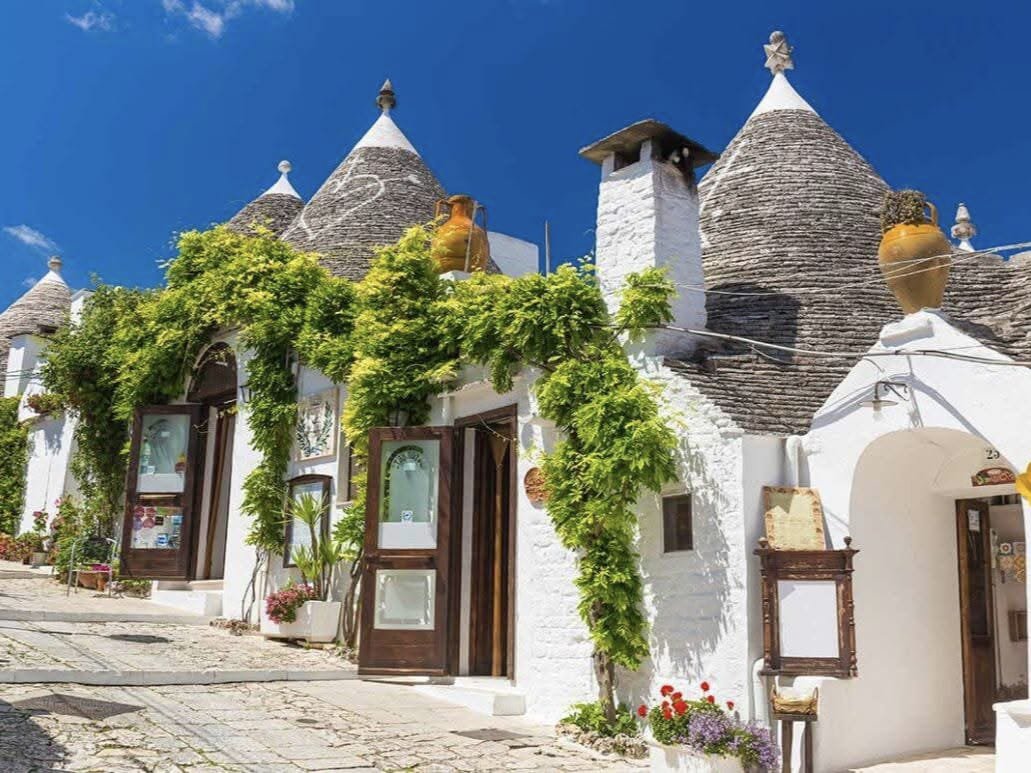
From Bari airport, allow about 1h15 of driving to reach Alberobello (around 60 kilometers), the capital of the trulli and a UNESCO World Heritage Site. The Rione Monti district has most of the shops and viewpoints, while Aia Piccola offers a more authentic, less crowded picture. In the late afternoon, head to Locorotondo (less than 10 minutes away), whose circular historic center can be walked in an hour.
Keep in mind: Alberobello is best visited early in the morning or at the end of the day, to avoid the tour buses that arrive in the middle of the day.
To plan this stop: Alberobello page and Locorotondo page.
Day 2: Ostuni and Martina Franca

In the morning, head to Martina Franca (about 20 minutes from Locorotondo), for its Baroque and Rococo center, often overlooked in favor of its better-known neighbors. In the afternoon, continue to Ostuni (about 30 minutes), whose Gothic cathedral and ramparts offer views over the olive plain all the way to the Adriatic Sea.
To plan this stop: Martina Franca page and Ostuni page.
Day 3: heading to Lecce, the Baroque capital of Salento
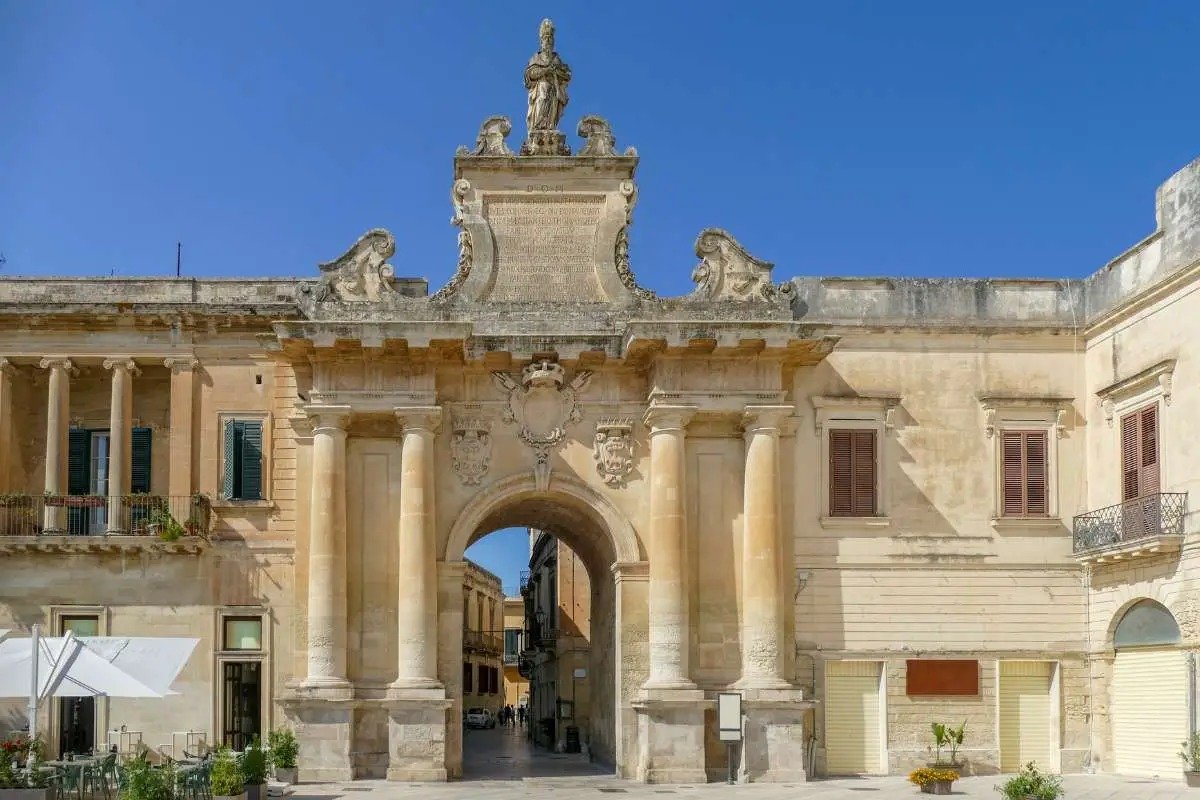
From Ostuni to Lecce, allow about 76 km and 55 minutes of driving. Nicknamed the “Florence of the Baroque” thanks to its soft, golden local stone, the pietra leccese, Lecce is best explored around the Santa Croce basilica, Piazza Duomo, the Roman amphitheater in the middle of town and Porta Napoli. A full day also leaves time to stroll through its wine bars and papier-mâché craft shops.
To plan this stop: full Lecce page.
Day 4: Otranto and the beaches of Salento

From Lecce to Otranto, allow about 39 km and 44 minutes. Not to be missed: the cathedral and its 12th-century Byzantine mosaic, the Aragonese castle, and, if time allows, the Baia dei Turchi, a few minutes away by car. The afternoon is made for the beach: the clear waters of the Adriatic side of Salento are among the most beautiful in Puglia.
To plan this stop: Otranto page and Baia dei Turchi.
Day 5: Polignano a Mare, Monopoli and the journey back
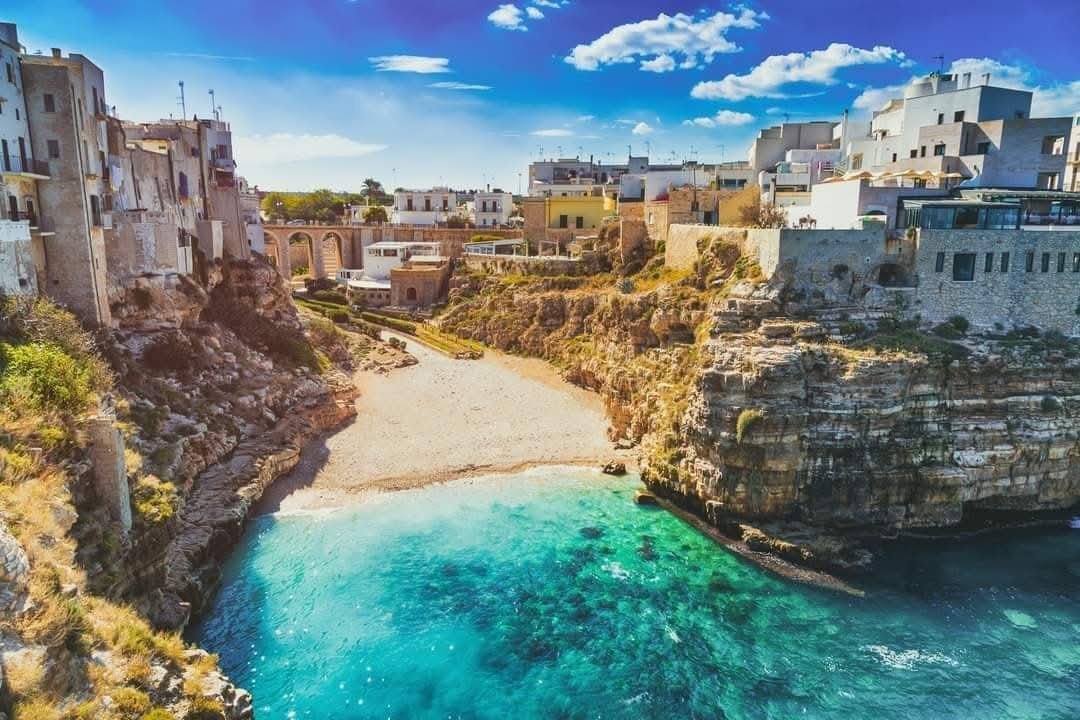
On the road back to Bari (about 1h30 from Lecce), one last stop is a must at Polignano a Mare, known for its houses clinging to the cliff and for Lama Monachile, a pebble beach tucked between two rock walls. Just 10 minutes away, Monopoli, less photographed but just as pleasant, with its still-active fishing port, lets you round off the loop before catching your flight in Bari.
Keep in mind: the car parks near the center of Polignano fill up quickly in season; leave yourself a margin before your flight if you are leaving in the late afternoon.
To plan this stop: Polignano a Mare page, Lama Monachile and Monopoli page.
Our APULIA favorites on this itinerary
A few APULIA pages directly linked to the stops on this 5-day route.

Locorotondo
A stone’s throw from Alberobello, this white village in the Itria Valley deserves a stop for its flower-lined alleys.

Cisternino
Listed among the most beautiful villages in Italy, with its bracerie where you pick your meat at the counter.
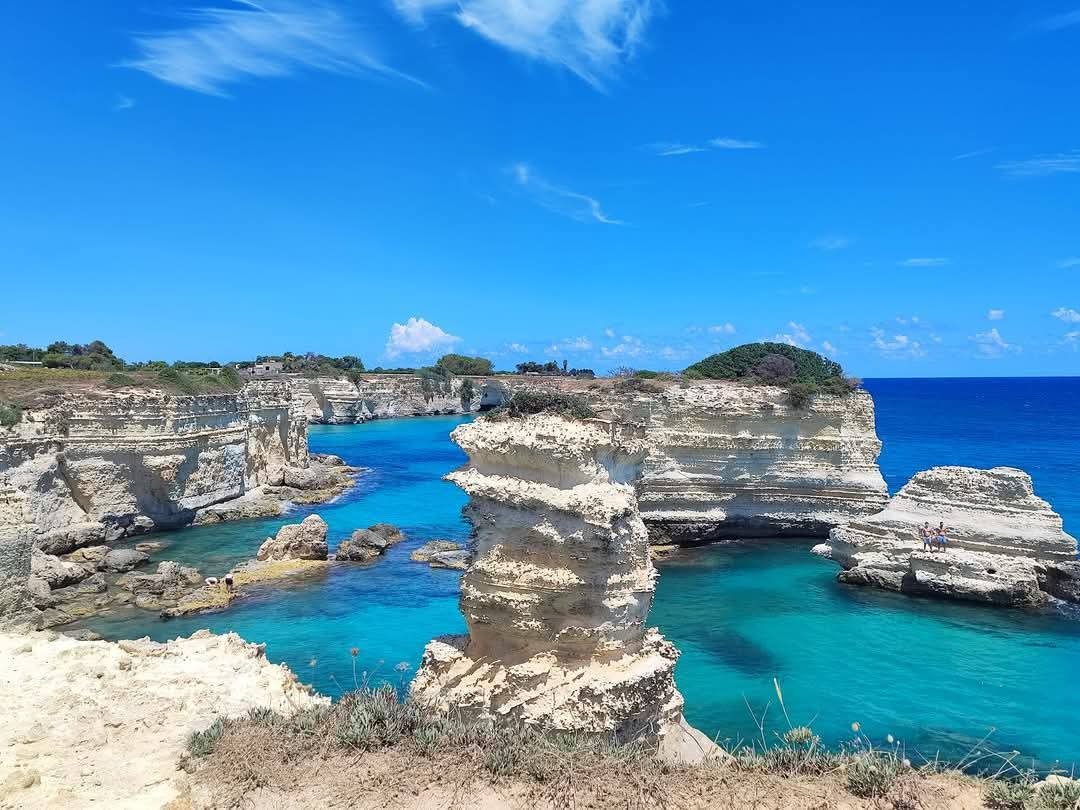
Torre Sant’Andrea
On the road between Otranto and Lecce, these rock formations are worth a swimming break.
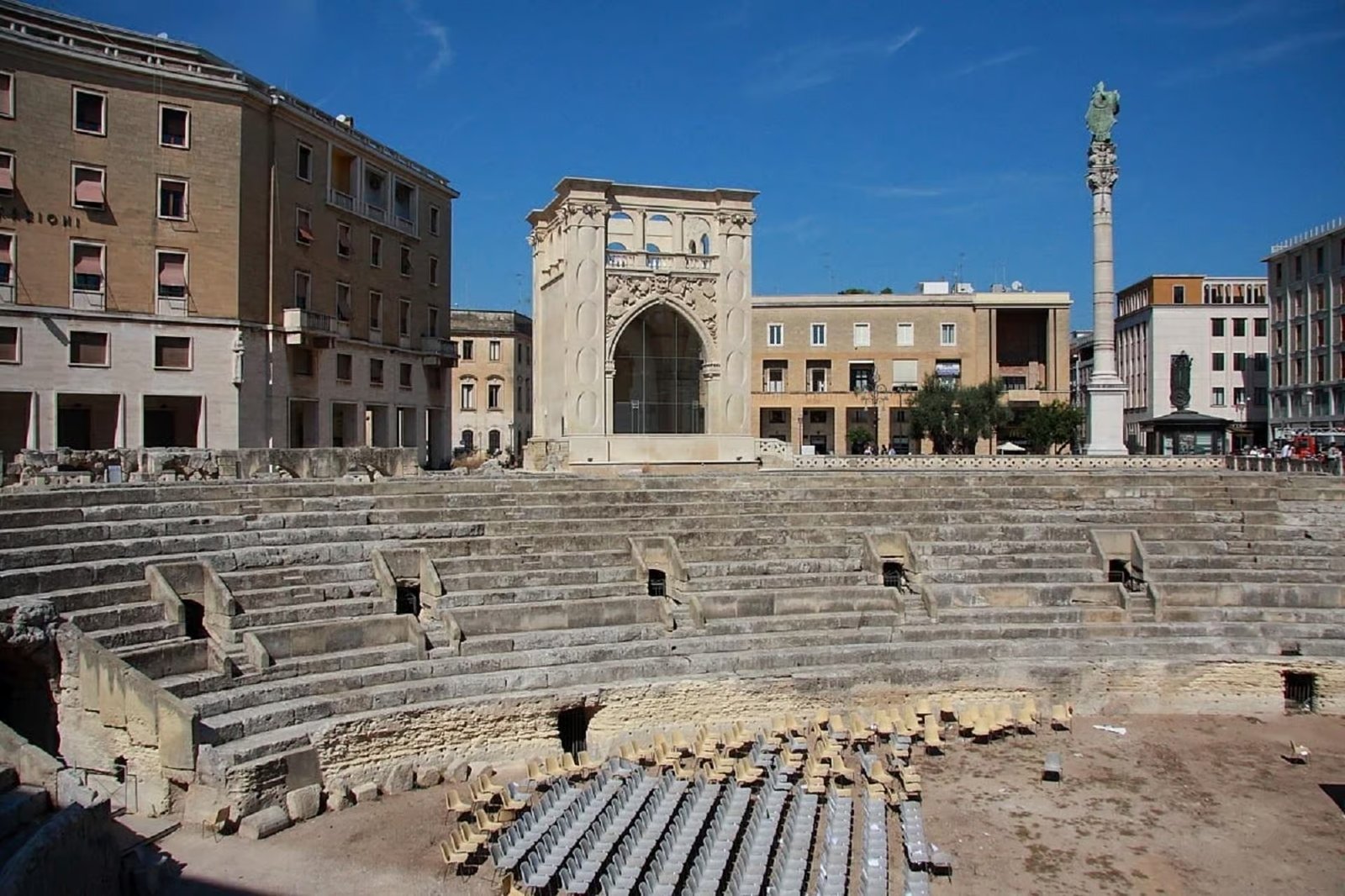
Guided tour of Lecce
To shed light on the Lecce Baroque before wandering the old town on your own.
Where to stay on this route
Over 5 days, two bases are enough: one or two nights in the Itria Valley or in Ostuni, then two to three nights in Lecce to branch out to Otranto and the beaches of Salento before taking the road back to Bari.
To choose the most suitable area and discover a selection of accommodations, see our complete guide to accommodation in Puglia.
Budget and practical tips
For a breakdown of costs, see our budget guide for a trip to Puglia, and mistakes to avoid in Puglia.
| City | Active ZTL | Tip |
|---|---|---|
| Ostuni | All year, access allowed 07:00-10:00/14:00-17:00 (some streets 08:00-13:00/16:00-19:00) | Car parks on the edge of the historic center |
| Lecce | All year, 21:00-06:00 every day | Paid car parks signposted at the edge of the center |
| Otranto | Generally 19:00-02:00, mostly June to September | Park via Idro / lungomare degli Eroi |
These hours change every year: always check the municipal ordinance in force before your trip.
Common mistakes to avoid on this route
- Trying to add the Gargano: in 5 days, northern Puglia cannot be reached without sacrificing the entire rest of the route.
- Underestimating the time needed in Lecce: a single half-day is not enough to appreciate the Baroque center.
- Ignoring the ZTLs of Ostuni and Lecce, which automatically issue fines by camera.
- Not booking accommodation in Lecce early enough in high season: the city remains in very high demand in summer.
Frequently asked questions
Are 5 days enough to visit Puglia?
5 days let you discover a tight triangle: the Itria Valley, Ostuni and Salento (Lecce, Otranto). The Gargano and Taranto remain out of reach in this format; our 7-day or 10-day itineraries let you widen the route.
Do you absolutely need a car?
Yes: the distances between the Itria Valley, Ostuni and Salento are too great to rely on public transport alone in this timeframe.
Is it better to stay in Ostuni or in Lecce?
Both work: Ostuni suits the first two days better (Itria Valley, Martina Franca), while Lecce is better for branching out to Otranto and the beaches of Salento on the following days.
What is the best time for this route?
May-June and September offer the best compromise between pleasant warmth and moderate crowds, with a sea already warm enough for swimming in Salento.
Plan your trip with APULIA
To organize this route day by day, locate the beaches and villages mentioned in this article, save your favorites and ask your practical questions in real time:
In summary
This 5-day route covers the essentials between the Itria Valley, Ostuni and Salento, without the Gargano or Taranto, which need more time. If you can extend your trip, our 7-day itinerary adds Bari and Gallipoli, our 10-day itinerary includes the Gargano, and our 15-day itinerary covers almost the entire region. If you have less time, see instead our guide Puglia for a weekend: 3 and 4-day itineraries.