
The question comes up with every trip plan: should you sleep in the same place the whole time, or change hotels every night? In Puglia, the right answer depends above all on your itinerary. The region is long and narrow, and a well-placed accommodation can save you an hour on the road every day. This guide goes through the main areas to stay in, with real examples of places to stay depending on the kind of trip you’re after.

- Itria Valley (Alberobello, Locorotondo, Martina Franca): trulli and masserias with pools, ideal for an authentic experience.
- Ostuni and the Adriatic coast: masserias, resorts and boutique hotels, 10-15 minutes from the beaches. For example, Casa Tonini is a well-located holiday home in this area.
- Salento (Lecce, Gallipoli, Otranto): B&Bs in the historic centre, masserias and hotels, close to the southern beaches.
- Bari: city hotels, handy for a late arrival or departure.
- Most travellers choose two or three successive bases rather than a single fixed one, as Puglia stretches over more than 300 km.
- Without a car: favour Bari, Lecce or Ostuni — masserias are rarely reachable by public transport.
- The main areas to stay in Puglia
- The Itria Valley: trulli and masserias
- Ostuni and the central Adriatic coast
- Salento: masserias and boutique hotels
- Bari: for a short stopover
- The Gargano: if your route heads north
- Our favourite APULIA stays
- Which accommodation suits your travel profile
- Mistakes to avoid when booking
- Frequently asked questions
The main areas to stay in Puglia
Before you book, it helps to understand the geography of Puglia and its regions: Puglia stretches over more than 300 km from the Gargano to Salento, and no single accommodation puts everything within an hour’s drive. Most travellers choose two or three successive bases rather than a single fixed one.
| Area | Main type of accommodation | Ideal for |
|---|---|---|
| Itria Valley (Alberobello, Locorotondo, Martina Franca) | Trulli, masserias with pools | An authentic experience, a romantic stay or relaxation |
| Ostuni and the central Adriatic coast | Masserias, resorts, boutique hotels | Combining the white town with beaches 10-15 min away |
| Salento (Lecce, Gallipoli, Otranto) | B&Bs in the historic centre, masserias, hotels | Southern beaches, nightlife, Lecce’s baroque |
| Bari | City hotels | Late arrival/departure, one-night stopover |
| Gargano (Vieste, Peschici) | Seaside hotels, agriturismi | Routes heading north through Puglia |
The Itria Valley: sleeping in a trullo or a masseria
This is the most requested area, and for good reason: it is where you’ll find the trulli of Alberobello, the white lanes of Locorotondo and the quieter historic centre of Cisternino. Sleeping in a genuine trullo converted into a guesthouse is one of the most sought-after experiences in the region: a conical dry-stone roof, thick walls that keep the heat out, and often a pool tucked among the olive trees.
Around Martina Franca, several masserias (fortified farmhouses converted into high-end accommodation) offer the same spirit with more space and services. Expect a clear price premium over a standard B&B, but the experience often justifies the choice for at least two nights.
Keep in mind: these places are often isolated in the middle of the countryside, 5-15 minutes by car from the nearest village. A car is practically essential in this area.
Ostuni and the central Adriatic coast

Staying around Ostuni lets you combine the white town with the beaches of the Adriatic coast (Torre Canne, Rosa Marina, Torre Santa Sabina), all within 15 minutes by car. It’s a good compromise for anyone who wants both heritage and swimming without too much travelling around. The area also has several resorts with spas, geared more towards beach relaxation than rural discovery.
Salento: masserias, B&Bs and boutique hotels
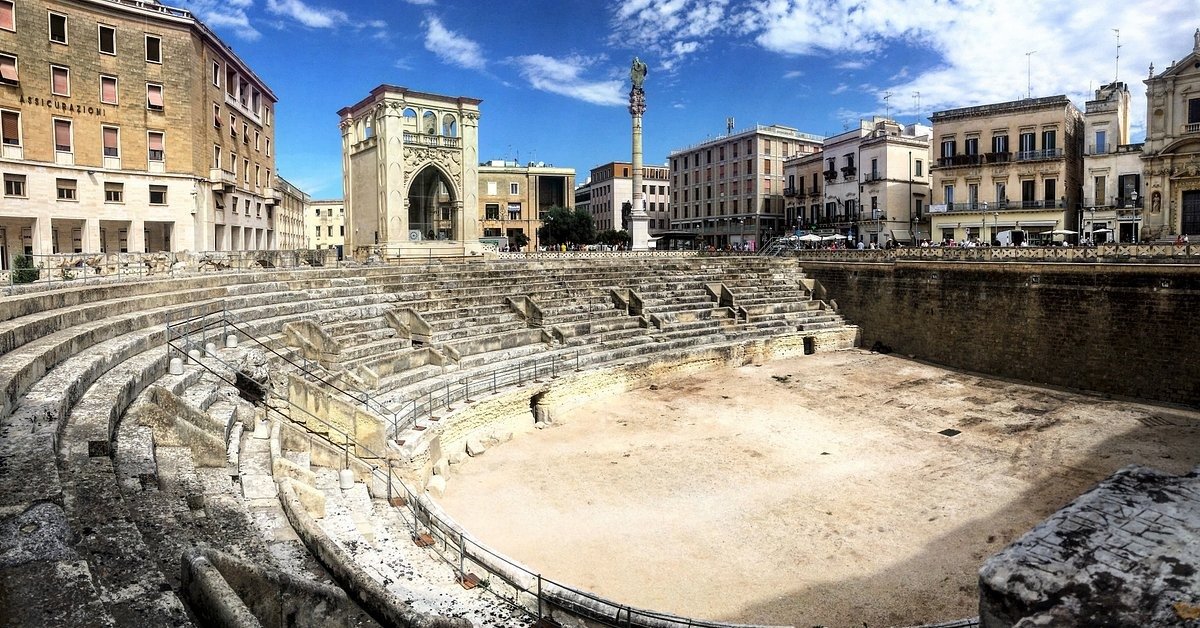
Lecce makes a comfortable urban base, with a dense choice of B&Bs in the historic centre within walking distance of Lecce’s baroque architecture. To be closer to the beaches, aim for Gallipoli (festive atmosphere, nearby beaches) or Otranto (calmer, turquoise waters). Salento also has a good share of APULIA’s masserias and boutique hotels, often at more affordable rates than in the Itria Valley.
Bari: for a short stopover or an early-morning flight

Bari isn’t the most typical destination in Puglia, but it’s a logical stop at the start or end of a trip: international airport, central station, and an old town (Bari Vecchia) that deserves an evening stroll. City hotels are more numerous there and generally cheaper than elsewhere in the region in high season.
The Gargano: if your route heads north
The Gargano, a mountainous promontory in the north of Puglia, works as a destination in its own right: distances from Bari or Salento are considerable (more than 2 hours’ drive), so it’s better to give it a dedicated base if your trip includes it. Vieste is the most touristy town in the area, with a wide choice of seafront hotels and direct access to some of the most spectacular beaches in Puglia.
Our favourite APULIA stays
Here is a selection of places genuinely listed in APULIA, worth checking before you book to see photos, reviews and up-to-date practical information:
- Masseria Pizzofalcone — masseria with pool, authentic feel
- Masseria Fagà — in Salento, countryside setting
- Rocco Forte Masseria Torre Maizza — luxury masseria, for an exceptional stop
- Pietrablu Resort & Spa — resort with spa, geared towards beach relaxation
- Trulli di Pozzomasiello — sleep in a real trullo
- Trulli Holiday Albergo Diffuso — several trulli in an albergo diffuso format
- Palazzo Casto Relais — in Salento, charming atmosphere
- Canne Bianche Lifestyle Hotel — design hotel by the sea

Which accommodation suits your travel profile
| Profile | Recommendation |
|---|---|
| Couple, romantic stay | Trullo or masseria in the Itria Valley, 2-3 nights |
| Family with children | Masseria with pool or seaside hotel, close to family-friendly beaches |
| Tight budget | B&B in the historic centre (Lecce, Gallipoli), outside high season if possible |
| Touring without a car | Bari, Lecce or Ostuni, well connected by train (see our guide to travelling without a car) |
| Craving luxury for a night | High-end masseria (e.g. Rocco Forte Torre Maizza) |
Mistakes to avoid when booking your accommodation
- Choosing a single accommodation for the whole trip: on a trip of more than 5 days, this often means 1.5 to 2 hours of driving every day. Better to split it into 2-3 bases.
- Underestimating how isolated masserias are: many are deep in the countryside, with no shops nearby. Check the real distance to the nearest village.
- Booking late for July-August: the best places (masserias with pools in particular) are often booked several months ahead in high season.
- Ignoring the question of parking in historic centres: several towns (Ostuni, Lecce, Otranto) have limited traffic zones (ZTL); check whether your accommodation has parking or an access permit.
Frequently asked questions
Should you change accommodation several times during your stay?
For a stay of 5 days or more, yes: two bases (for example the Itria Valley, then Salento) avoid overly long daily drives while keeping a reasonable pace.
Are masserias accessible without a car?
Rarely in any practical way: most are in the middle of the countryside, poorly served by public transport. If you’re travelling without a car, favour Bari, Lecce or Ostuni instead.
What is the best area for being close to the beaches?
Salento (Gallipoli, Otranto) and the Adriatic coast around Ostuni offer the most direct access to the best-rated beaches.
Is it better to book a hotel or a masseria?
It depends on your budget and what you’re after: a masseria offers a more authentic experience and more space, while a city hotel (in Bari or Lecce) offers more flexibility and proximity to shops.
Prepare your trip with APULIA
In summary
There is no single right answer to the question “where to stay in Puglia”: it all depends on your itinerary and the pace of your trip. The Itria Valley for the trullo experience, Ostuni for combining heritage and beaches, Salento for swimming and nightlife, Bari for a practical stopover. The best instinct is still to split your stay into two or three bases rather than looking for one fixed point.
Once you’ve chosen your area, find all our other practical tips (budget, car, when to go) in Travelling in Puglia: practical tips to prepare your trip.
Planning a honeymoon or a wedding? See our guide to honeymoons and weddings in a masseria in Puglia.
Want to sleep in the most typical architecture of Puglia? See our guide to sleeping in a trullo, in town or in the countryside.