
Visiting Puglia without a car is absolutely doable, as long as you’re happy with a slightly different pace: less flexibility with timetables, but comfortable rides along the coast and a good excuse to look up from the road. This guide follows the logic of our 7-day itinerary and adapts it step by step to the trains and buses that actually run locally, with no guesswork.
- Understanding the network: Trenitalia, FSE and buses
- Tickets, apps and validation
- From Bari Airport without a car
- Day 1: Bari
- Day 2: Polignano a Mare and Monopoli
- Day 3: the Itria Valley
- Day 4: Ostuni
- Day 5: Lecce
- Day 6: Otranto and Salento
- Day 7: Gallipoli
- The seasonal Salento in Bus service
- Common mistakes to avoid
- Frequently asked questions
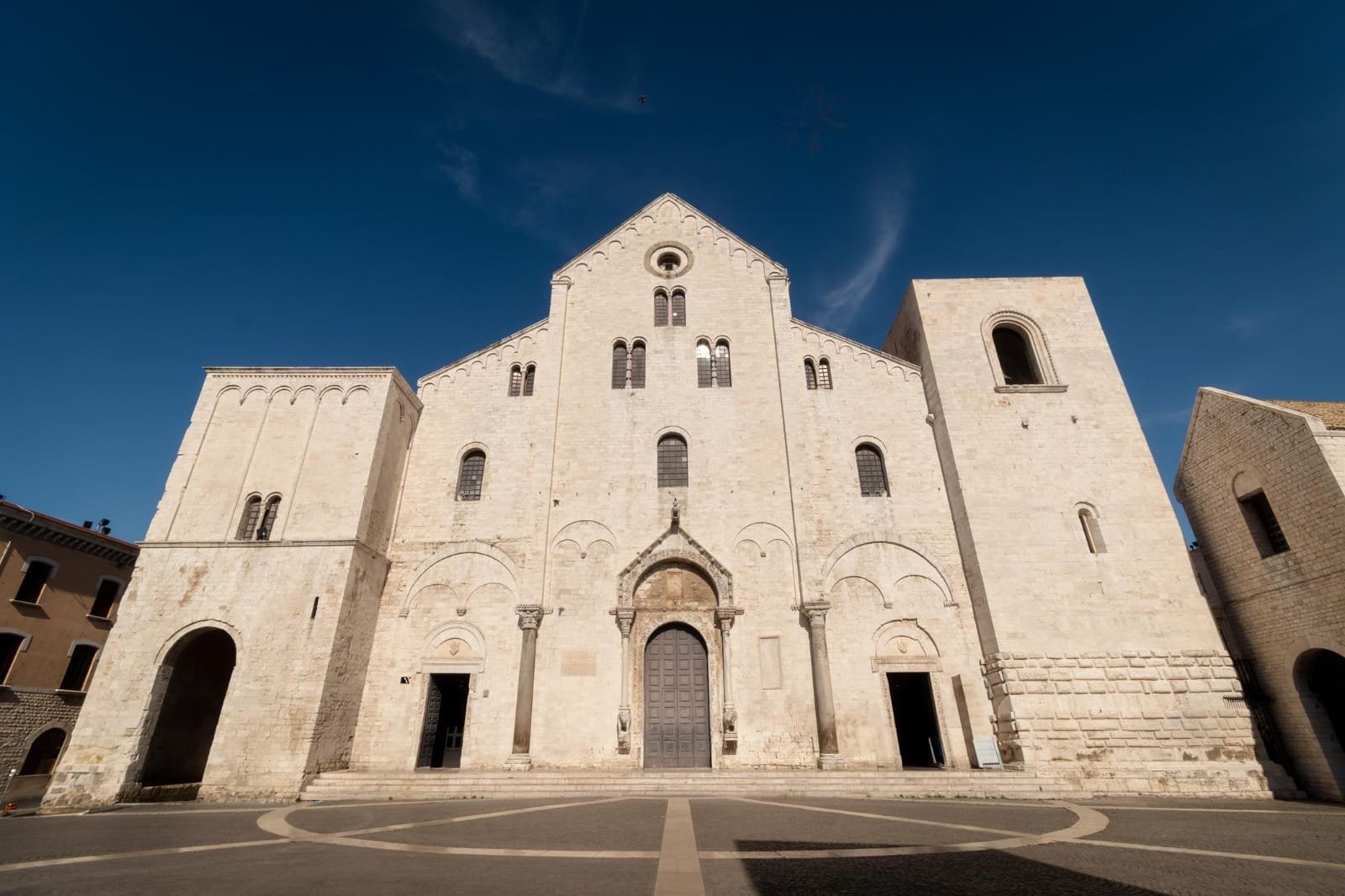
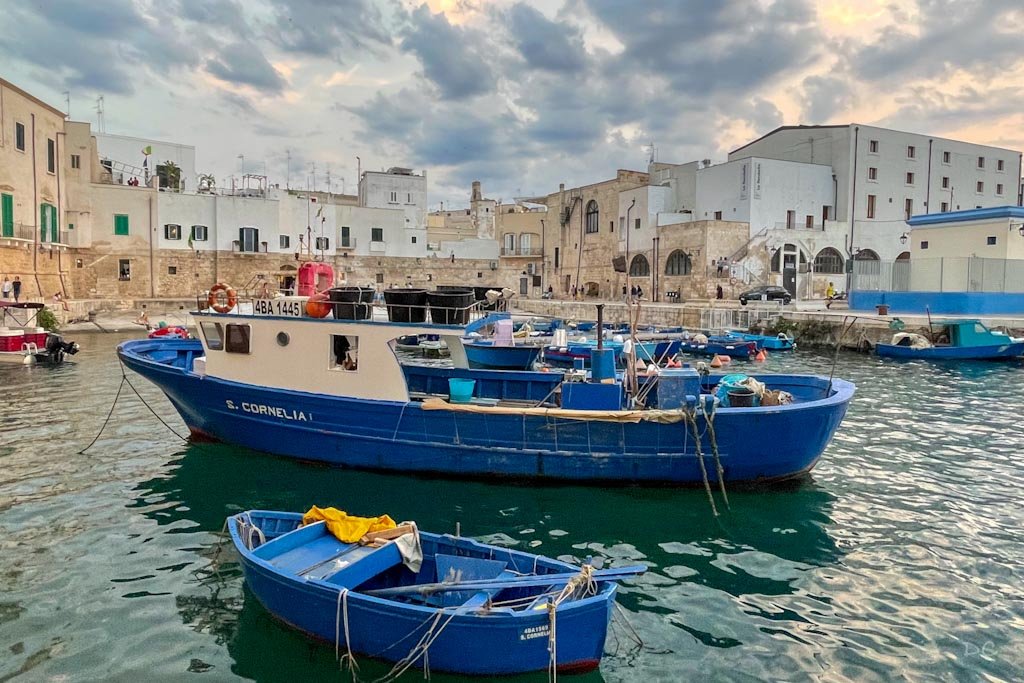
Polignano and Monopoli
Two stations on the same line, just a few minutes apart by train.
Understanding the network: Trenitalia, FSE and buses
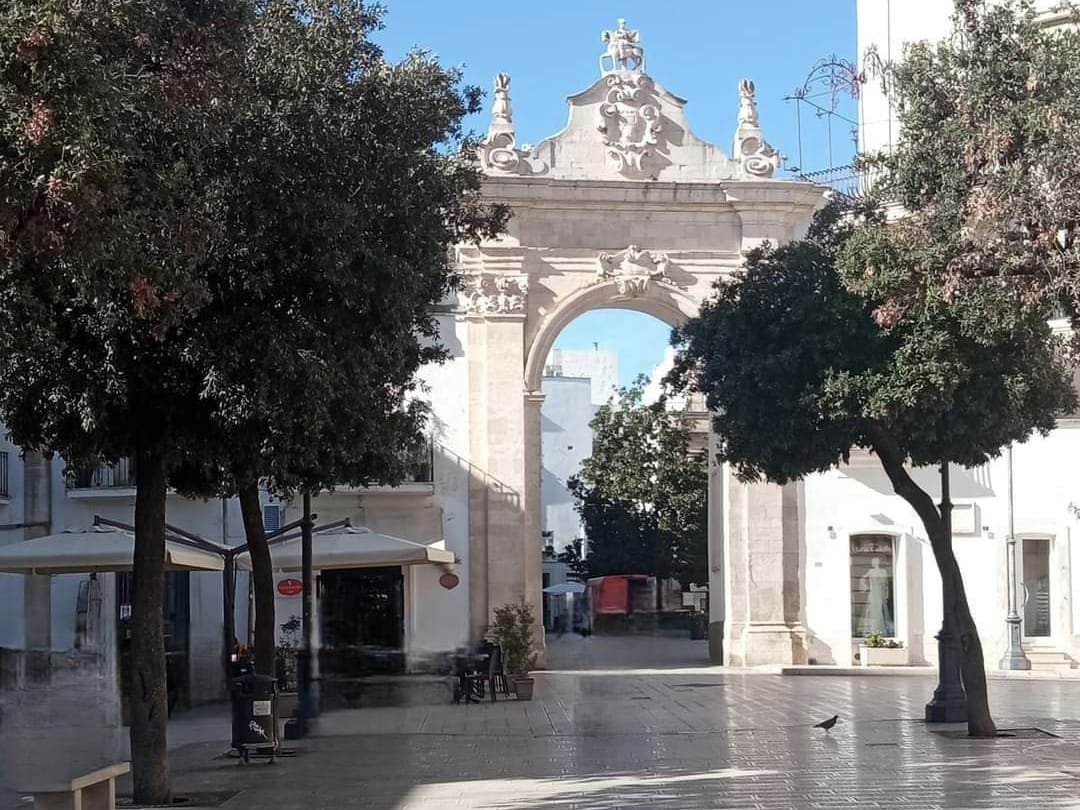
Three networks share Puglia, and it’s worth knowing them so you don’t waste time looking for a train that doesn’t exist on the operator you’re checking.
Trenitalia is the backbone along the Adriatic coast: Bari, Polignano a Mare, Monopoli, Fasano, Ostuni, Brindisi and Lecce are linked by Regionali trains (the cheapest) and faster but pricier Intercity services.
Ferrovie del Sud Est (FSE), a Trenitalia subsidiary but run separately, serves two areas the national rail network doesn’t cover: the Itria Valley from Bari (Martina Franca, Alberobello, Cisternino) on one side, and Salento from Lecce (Gallipoli, Otranto via Maglie, down to Gagliano del Capo) on the other. FSE also runs a complementary bus network, especially in rural areas and on Sundays.
In several towns, the FSE station and the Trenitalia station are two different buildings, sometimes far apart. Always check which station your train leaves from before you set off.
Where neither trains nor regular buses are enough, local operators step in: STP Brindisi and STP Terra d’Otranto for routes around Brindisi, Ostuni, Lecce and Gallipoli, plus a seasonal Salento-only service detailed below.
Tickets, apps and validation
Tickets can be bought from the self-service machines at stations (cards accepted), in authorised bars and tobacconists in smaller towns, or directly in the Trenitalia app, which also covers FSE journeys. A regional ticket bought at the station must be validated before boarding, using the yellow or green machines; a ticket bought in the app is validated automatically.
For buses, the COTRAP website brings together some regional timetables, but it doesn’t include FSE bus lines: in that case, check the FSE website directly. Google Maps works well for Trenitalia journeys and city buses, but remains incomplete for rural routes.
From Bari Airport without a car
Bari Karol Wojtyła Airport is linked to the city centre and Bari Centrale by a direct rail service (FM2 line, operated by Ferrotramviaria), making it the most convenient entry point to start this car-free loop. If your flight lands in Brindisi rather than Bari, Brindisi station is directly connected to Lecce and the Adriatic coast by Trenitalia.
Day 1: Bari
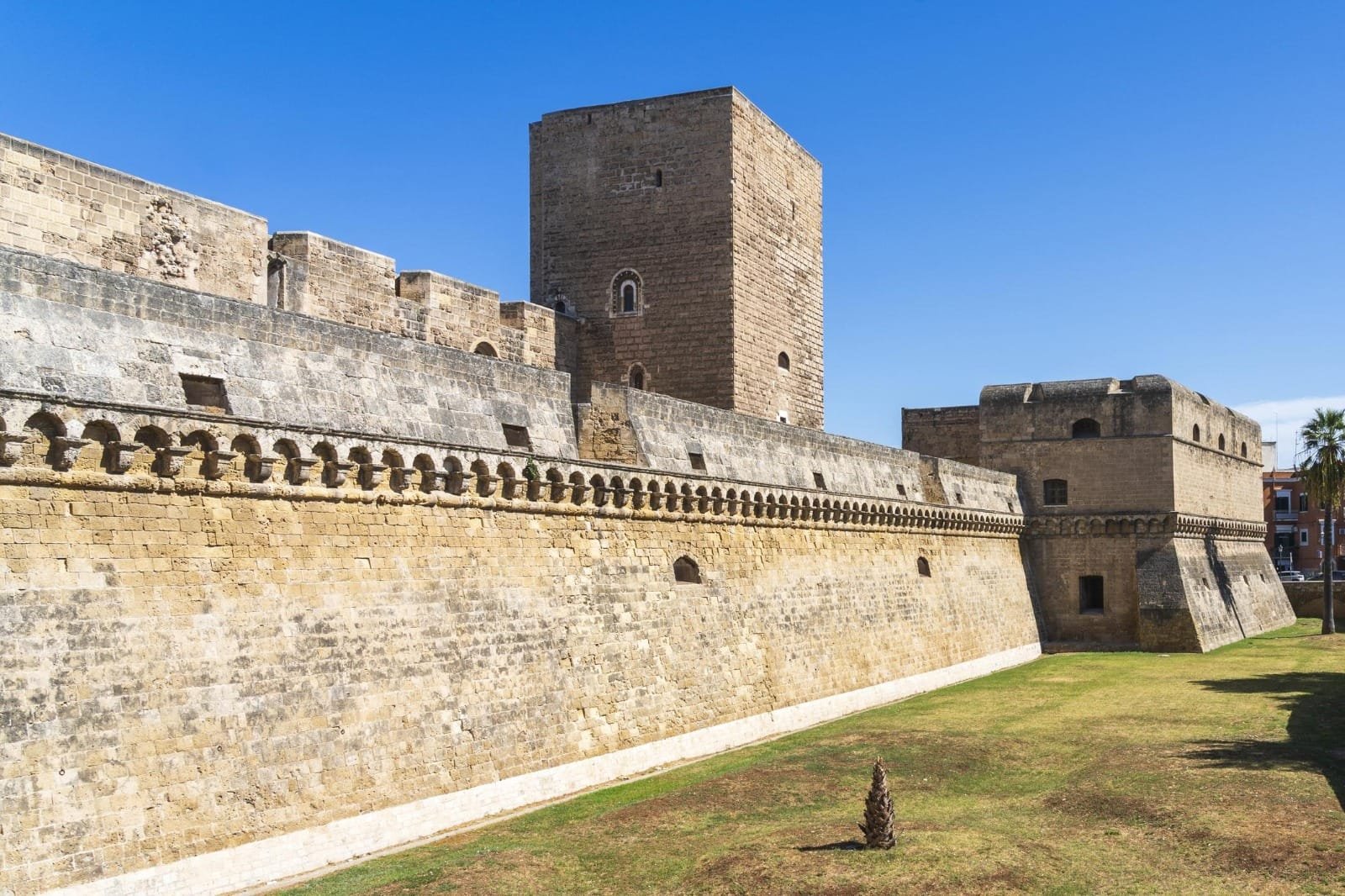
No travel on this first day: Bari is the main hub for both Trenitalia and FSE, the ideal place to drop your bags and explore Bari Vecchia on foot before catching your first train the next day. For the full sightseeing plan for this stop, see Day 1 of the full itinerary.
Day 2: Polignano a Mare and Monopoli
A direct Trenitalia line from Bari Centrale, stopping at Polignano a Mare and then Monopoli a few minutes later: it’s one of the simplest rides of the whole trip, with no changes. Both stations are a short walk from the historic centres. Detailed plan: Day 2 of the full itinerary.
Day 3: the Itria Valley
To reach Alberobello from Bari, you have two options: the FSE train via Putignano (just over an hour), or a direct bus from Bari to Alberobello in a similar time. For Locorotondo and Cisternino, it’s best to combine both villages in a single outing from Alberobello or Martina Franca, using a local bus or a short taxi ride: direct connections between these three villages are more limited than along the main axis. Cisternino is a classic trap: its Trenitalia station is far from the centre, while the FSE stop is much closer to the village—always check which one serves your route.
Day 4: Ostuni
Trenitalia connects the Itria Valley directly to Ostuni (or Bari to Ostuni on a direct line, around two hours); the station is outside the White City, but connecting buses shuttle up to the centre. For Martina Franca, the FSE line links it to Alberobello and Bari: combine it with Day 3 if you’d rather cover the whole Itria Valley in one go instead of splitting it over two days.
Day 5: Lecce
Lecce is the second major hub of the loop: Trenitalia links it directly to Ostuni, Brindisi and the whole Adriatic coast, and it’s also the starting point for the FSE network into Salento (Gallipoli, Otranto, Gagliano del Capo). It’s the ideal stop to take a breather for a day without luggage, before branching out further south.
Day 6: Otranto and Salento
From Lecce, the FSE line serves Otranto via Maglie, with a shuttle bus connection for the last part of the journey—allow a little over 1 hour 30 minutes in total. In high season (see the Salento in Bus section below), there’s also a direct Lecce–Otranto line. For Santa Maria di Leuca, at the tip of Salento, the seasonal Salento in Bus service is the most practical link from Lecce or from Otranto.
Day 7: Gallipoli
A direct FSE line from Lecce, around 90 minutes: it’s one of the most comfortable rides of the loop to close the circuit before flying home from Bari or Brindisi.
The seasonal Salento in Bus service
Each year, the Province of Lecce coordinates a summer bus network called Salento in Bus, designed specifically to reach Salento’s beaches and villages without a car. For the 2026 season, the service runs from June 13–30, then at peak season from July 1–August 31 (highest frequencies), and finally from September 1–13. Several lines tie in directly with this itinerary: Lecce–Torre dell’Orso–Otranto, Lecce–Porto Cesareo–Gallipoli, Lecce–Maglie–Otranto, and two lines linking Lecce and Gallipoli to Santa Maria di Leuca. The service is operated by several local carriers (including STP) under the province’s coordination.
This service is seasonal: outside these dates, use the standard FSE network described above to reach Otranto, Gallipoli and southern Salento.
Common mistakes to avoid
- Mixing up the FSE station and the Trenitalia station: in several towns (Cisternino in particular), they’re two separate stations, sometimes kilometres apart.
- Forgetting to validate your ticket before boarding a regional train bought at the station.
- Travelling on a Sunday without checking the timetable: replacement buses often run instead of trains, with different departure points.
- Relying only on Google Maps or Rome2Rio for rural buses: these tools don’t fully cover FSE and local lines; always cross-check with the operator’s website.
Frequently asked questions
Can you really do this 7-day itinerary entirely without a car?
Yes—by following the order Bari, Polignano a Mare, the Itria Valley, Ostuni, Lecce, Otranto, Gallipoli: each stop is connected to the next by Trenitalia, FSE or a regular bus. You just need to accept less flexible timetables than by car, especially for the Itria Valley villages.
Is the FSE network reliable?
It covers areas the national rail network doesn’t serve, but with lower frequency than Trenitalia’s Adriatic line, especially on Sundays. It’s best to check same-day timetables in the Trenitalia app, which also includes FSE journeys.
Do you need to book train tickets in advance?
No: regional trains and most buses don’t require reservations, and tickets can be bought at the station or in the app on the day.
How do you reach Locorotondo and Cisternino without a car?
The easiest option is to pair them with Alberobello or Martina Franca, which are well served by FSE, then reach the two villages by local bus or a short taxi ride: direct connections are more limited than along the main axis.
Does Salento in Bus run all year round?
No, it’s a seasonal service that runs from June to September. The rest of the year, use the standard FSE network to reach Otranto, Gallipoli and Santa Maria di Leuca from Lecce.
Plan this car-free itinerary with APULIA
To adapt this train-and-bus loop to your dates, with timetables and local picks checked area by area: plan your trip in Puglia with APULIA.