
Beyond the beaches and villages, Puglia has one of the richest calendars of traditional festivals in Italy: a carnival more than six hundred years old, a huge ritual bonfire, a patron saint’s feast where a statue takes to the sea, and a giant concert devoted to the folk music of Salento. Attending one of them means seeing another side of the region.
Here are the major traditional events in Puglia, in calendar order.
QUICK ANSWER
- December to March: Carnevale di Putignano, one of the oldest carnivals in Europe.
- Mid-January: Fòcara di Novoli, one of the largest ritual bonfires in Europe.
- Early May: Festa di San Nicola in Bari, with its procession at sea.
- Late August: Notte della Taranta in Melpignano, a giant concert devoted to pizzica.
- Worth knowing: exact dates change every year, so always check the official programme before you go.
Contents
December to March: the Carnevale di Putignano
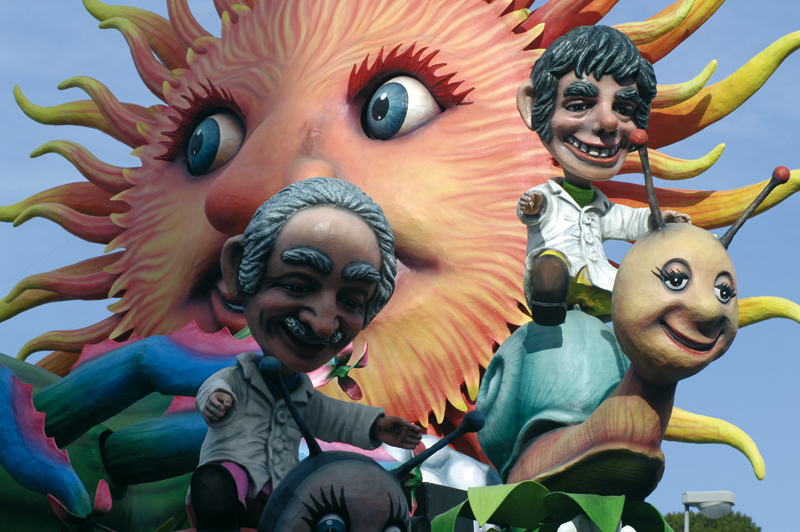
The Carnevale di Putignano, in the Itria Valley, is one of the oldest and longest carnivals in Europe: the tradition goes back to 1394, when the transfer of the relics of Saint Stephen inland, to protect them from Saracen raids, is said to have given rise to a spontaneous festive procession of local peasants. The carnival opens every year on 26 December with the “Festa delle Propaggini” and runs until Shrove Tuesday, growing in intensity from 17 January, the feast of Sant’Antonio Abate.
Its signature: huge allegorical floats made of papier-mâché, built by local craftspeople on iron frames, with ever more sophisticated mechanised parts. Several parades punctuate the season, each with its own theme.

Mid-January: the Fòcara di Novoli
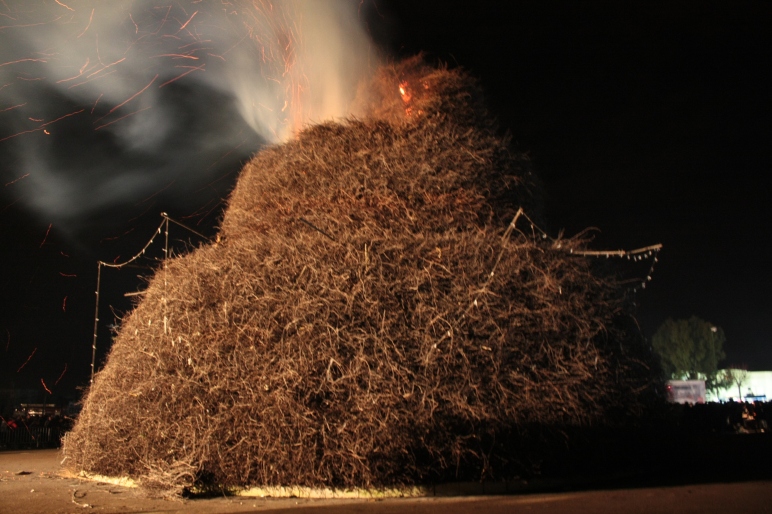
In Novoli, in Salento, the night of 16 January (the eve of the feast of Sant’Antonio Abate) sees one of the largest ritual bonfires in Europe go up in flames: a pyre about 25 metres high and 20 metres in diameter, built from more than 100,000 bundles of vine cuttings. Construction begins in early December and involves around a hundred volunteers and craftspeople.
The evening blends religious rites (Mass, blessing) with a cultural programme: craft market, concerts, exhibitions. Every year the event draws tens of thousands of visitors.
Early May: the Festa di San Nicola in Bari
In early May (the main date is usually 8 May), Bari celebrates its patron saint, Saint Nicholas, whose relics have been kept in the basilica that bears his name ever since they arrived from Myra in 1087, brought back by sailors from Bari. The high point of the festival is the processione a mare: the saint’s statue is carried out to sea by boat, escorted by a flotilla, before joining the procession on land through the streets of the old town.
To discover the city beyond its patron saint’s festival, see our complete guide to Bari.
Late August: the Notte della Taranta
The Notte della Taranta is one of the largest folk music festivals in Europe, devoted to pizzica, the traditional dance and music of Salento historically linked to the healing rites of “tarantism”. A travelling festival moves through several Salento villages all summer long, before culminating in Melpignano with a huge free open-air concert, the “concertone”, which brings together traditional artists and guests from the pop or rock scene each year in front of hundreds of thousands of spectators.
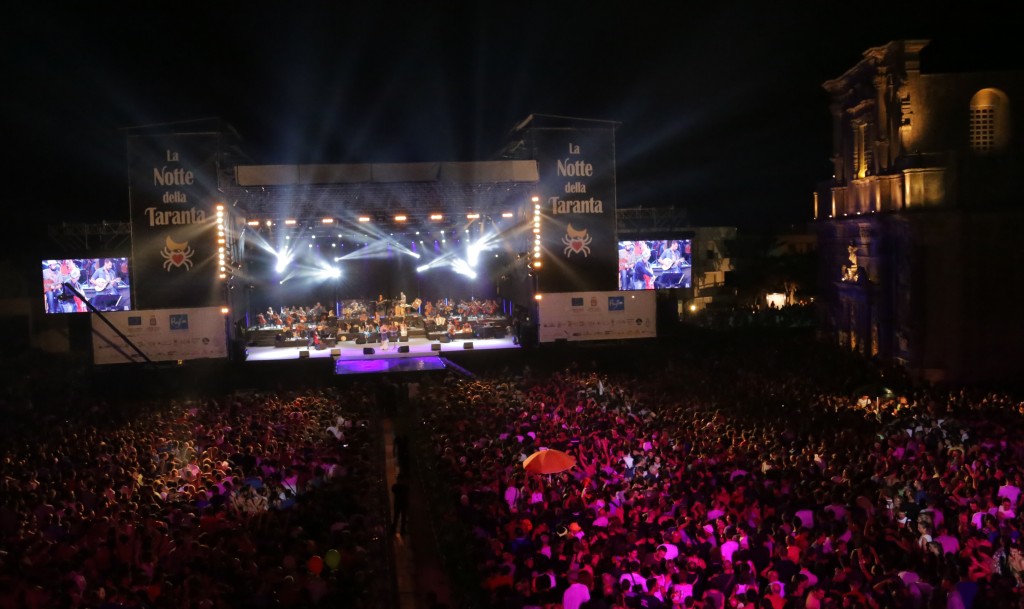
The concertone usually takes place in the second half of August, but the exact date changes every year: check the official programme before planning your visit, and plan to arrive early to find a spot.
Other summer patron saint festivals
Between July and September, most villages in Puglia celebrate their patron saint. Two events stand out in particular:
- Festa di Sant’Oronzo in Ostuni (25-27 August): three days of celebration built around the “Cavalcata”, a parade of richly decked-out horses and riders in period costume, followed by a religious procession and fireworks over the Città Bianca. See our complete guide to Ostuni.
- Festa dei Martiri d’Otranto (14 August): commemoration of the 800 martyrs of Otranto, covered in detail in our complete guide to Otranto.
Another characteristic feature of the Puglian summer: the luminarie, those elaborate arches of lights set up for patron saint festivals, especially in Salento, which transform entire streets once night falls.
The sagre: local food festivals
Outside the big events, many small villages hold a sagra in summer: a popular festival devoted to a local product (fish, orecchiette, taralli, watermelon…), with low-cost tastings, music and a village-fair atmosphere. It is often the most authentic chance to combine food discovery with local life, but the dates and villages involved change every year: ask locally or at the local tourist office before your trip.
Practical tips
For big events like the Fòcara di Novoli or the Notte della Taranta concertone, the crowds are huge: book your accommodation well in advance if your trip coincides with one of these dates, and expect parking to be limited (shuttles are usually laid on from neighbouring villages). For the Carnevale di Putignano, the dates of the main parades follow the movable Easter calendar, so they change every year.
Mistakes to avoid
- Assuming the dates are fixed from one year to the next: always check the official programme before building your itinerary around a festival.
- Underestimating the crowds: the Fòcara and the Notte della Taranta attract tens, even hundreds of thousands of visitors; plan accommodation and parking ahead.
- Relying only on the big events: most take place in the evening or over several days; keep some flexibility in your itinerary.
- Ignoring the small sagre: they often offer a more authentic and less crowded experience than the big events.
Plan your trip around a festival with APULIA
Want to plan your trip around one of these events? The APULIA app helps you build an itinerary that fits your calendar across the whole region.
Want to plan your trip around a traditional Puglia festival?
Plan my trip with APULIAIn short
From the floats of the Carnevale di Putignano to the bonfire of the Fòcara di Novoli, by way of Bari’s procession at sea and the Notte della Taranta’s giant concert, Puglia punctuates its year with some of the oldest traditions in Italy. Keep in mind that exact dates change every year: a quick look at the official programme before you leave will spare you any nasty surprises.
Frequently asked questions
What is the most impressive festival in Puglia?
It depends on your taste: the Fòcara di Novoli impresses with its visual scale, the Notte della Taranta with the size of its concert, and the Carnevale di Putignano with the creativity of its floats.
When does the Carnevale di Putignano take place?
It opens on 26 December and ends on Shrove Tuesday, growing in intensity from mid-January. The dates of the main parades change every year according to the Easter calendar.
What is the Fòcara di Novoli?
One of the largest ritual bonfires in Europe, lit on 16 January in Novoli for the feast of Sant’Antonio Abate, built from more than 100,000 bundles of vine cuttings.
What is the Notte della Taranta?
A festival devoted to pizzica, the traditional music and dance of Salento, which culminates in late August in Melpignano with a giant, free open-air concert.
Do festival dates change every year?
Yes, for most of them: always check the event’s official programme before planning your trip around a specific date.