
At the easternmost tip of Italy, where the Adriatic meets the Ionian Sea, Otranto combines a thousand-year-old cathedral, a fortress facing the Balkans and some of the clearest waters in Puglia. Its fortified, entirely pedestrian old town tells a turbulent story, of which the Ottoman siege of 1480 remains the most striking chapter.
From an exceptional medieval mosaic and an Aragonese castle to wild beaches such as Baia dei Turchi, here is everything you need to know to visit Otranto.

QUICK ANSWER
- Top sights: the Cattedrale di Santa Maria Annunziata and its mosaic, the Castello Aragonese, the Lungomare degli Eroi.
- Recommended time: 2 to 3 hours for the essentials, half a day to a full day with the beach.
- Best time to visit: May-June and September for a pleasant climate; summer is very crowded.
- Access: old town in a ZTL zone all year round, park at the Via Orte or Porto car parks.
Contents
- Otranto in a nutshell
- Otranto and the 800 Martyrs: a defining chapter of its history
- What to see in Otranto: the must-sees
- What to eat in Otranto
- How to get to Otranto
- Traffic, ZTL and car parks
- How long to stay and when to visit
- Our favourites around Otranto
- Where to stay in Otranto
- Mistakes to avoid
- Frequently asked questions
Otranto in a nutshell
Otranto is a coastal town in Salento, at the eastern end of Italy, just under 80 km from the Albanian coast. Its fortified old town, surrounded by ramparts and bordered by the Adriatic Sea, can be explored entirely on foot. For centuries, its strategic position facing the Balkans made it a military and commercial outpost between the Christian West and the East.
Otranto and the 800 Martyrs: a defining chapter of its history
On 28 July 1480, an Ottoman fleet of about 140 ships, commanded by Gedik Ahmed Pasha, lands near Otranto and besieges the town. After two weeks of siege, the city falls on 11 August. On 14 August, according to historical accounts, 800 inhabitants who refuse to convert to Islam are executed on a hill near the town, now known as Colle della Minerva.
Their remains are now kept in the Cappella dei Martiri of the cathedral, on view in seven display cases. Recognised as martyrs by the Catholic Church, they were canonised by Pope Francis in 2013. Every year on 14 August, the Festa dei Martiri di Otranto commemorates this event, which remains central to the town’s identity.
The Ottoman troops occupy Otranto for about a year, until it is retaken by Aragonese forces in September 1481 — an episode that explains the later strengthening of the castle and ramparts.
What to see in Otranto: the must-sees

The Cattedrale di Santa Maria Annunziata, founded in 1068, houses one of the largest medieval floor mosaics in Europe: created between 1163 and 1165 by the Basilian monk Pantaleone, it covers the entire nave on the theme of the Tree of Life, blending biblical scenes, a medieval bestiary and legends such as the celestial journey of Alexander the Great carried by griffins. The Cappella dei Martiri and the crypt, supported by about forty bays and more than 70 columns, complete the visit.
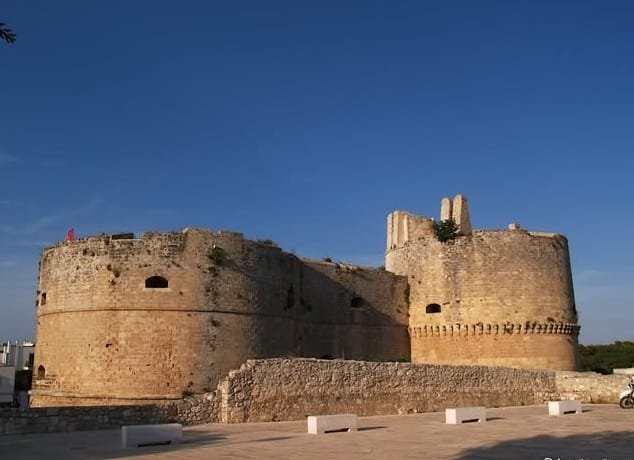
The Castello Aragonese, reinforced after the siege of 1480, overlooks the port. Its arrowhead-shaped bastions, typical of 16th-century military architecture, can be visited and offer a view over the whole fortified town.

The old town, entirely pedestrian, unfolds along white lanes, small shops and churches, including the Chiesa di San Pietro, decorated with Byzantine frescoes among the oldest in Puglia. The Lungomare degli Eroi (opening photo), which runs along the ramparts on the sea side, is the ideal promenade for admiring the contrast between golden stone and turquoise water, especially at sunset.
What to eat in Otranto
As everywhere in Salento, Otranto’s cuisine highlights fish and seafood, fresh pasta and local vegetables. The restaurants along the Lungomare degli Eroi offer a pleasant view but often higher prices; for more authentic places, it is better to walk a few streets away from the seafront.
For a complete tour of the regional classics, see our guide to the cuisine of Puglia.
How to get to Otranto
Otranto is about 40 minutes by road east of Lecce, and just under 2 hours from the airports of Bari or Brindisi (see our Bari or Brindisi comparison).
Without a car, Otranto station is connected to the regional lines of Salento (Trainline, Trenitalia), and regional buses (Omio) serve the town from Lecce and the rest of Salento.
Traffic, ZTL and car parks
Otranto’s old town is a ZTL zone all year round, from 1 April to 31 October, with restricted access every day from 10 to 6 in the morning, monitored by automatic cameras.
| Car park | Advantage |
|---|---|
| Via Orte | Convenient, at the entrance to the town |
| Porto | Close to the port and the old town |
Beyond these two car parks, blue zones with paid parking surround the old town. ZTL hours and rules may change: always check the signs at the entrance to the zone.
How long to stay and when to visit
Otranto can be visited in 2 to 3 hours for the essentials (cathedral and castle), or in half a day to a full day by adding the beach and a stroll along the Lungomare degli Eroi. For a stay on the spot, allow at least 1 night for a short stay, and 2 to 3 nights to make the most of the town and the nearby beaches.
Best time: May-June and September, for pleasant weather and more reasonable crowds. Summer is very busy, especially around 15 August.
As for events, the Festa dei Martiri di Otranto (14 August) is the most significant date of the year, followed by the Otranto Jazz Festival in summer and the Alba dei Popoli, a cultural festival held in December-January.
Our favourites around Otranto
Otranto combines naturally with its best-known beaches, a few minutes away by road:

Baia dei Turchi
Discreet access and unspoilt nature, golden sand and pines facing the Adriatic Sea.
Discover →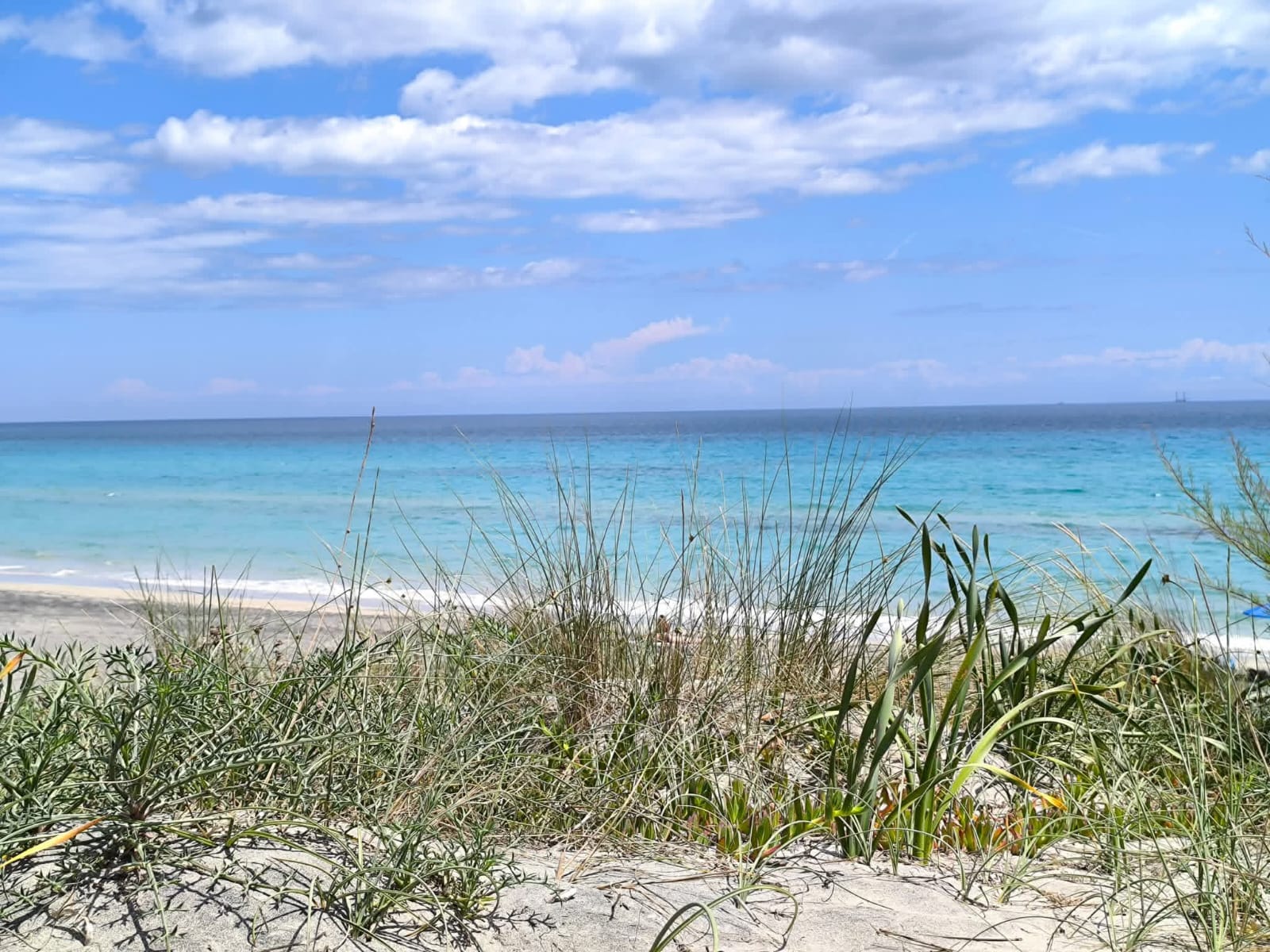
For a wider selection, see our article on the most beautiful beaches in Puglia.
Where to stay in Otranto
Staying in the old town lets you enjoy the fortified atmosphere early in the morning and in the evening, once the day visitors have left. Accommodation there is often small and within the ZTL zone; for more comfort with a car, some people prefer to stay on the outskirts, around Alimini or on the road to Baia dei Turchi. For a wider choice by area, see our guide to where to stay in Puglia.
Mistakes to avoid
- Parking in the old town: the ZTL zone is active every day and monitored by cameras. Park at Via Orte or at the Porto.
- Visiting the cathedral without taking a moment for the Cappella dei Martiri: it is an essential part of the town’s history, often skimmed over by groups in a hurry.
- Coming in midsummer without booking: car parks and accommodation fill up quickly, especially around 15 August.
- Seeing only the old town: Baia dei Turchi and Alimini, a few minutes away, complete the visit nicely.
Plan your visit to Otranto with APULIA
Do you want to organise your visit to Otranto day by day, combine it with the rest of Salento and save your favourite places? The APULIA app builds a tailor-made itinerary based on your dates and your wishes.
Looking for a hassle-free stay between Otranto, Salento and the rest of Puglia?
Plan my stay with APULIAIn short
Otranto deserves at least half a day on a Puglia itinerary: 2 to 3 hours for the cathedral and its mosaic, the Aragonese castle and the fortified old town, then a little beach time at Baia dei Turchi or Alimini. Come in May-June or in September for the best balance between weather and crowds, and take the time for the Cappella dei Martiri, the centrepiece of the town’s history.
Frequently asked questions
How long does it take to visit Otranto?
Allow 2 to 3 hours for the cathedral and the castle. With the beach and a stroll along the Lungomare degli Eroi, plan on half a day to a full day.
What is the best time to visit Otranto?
May-June and September offer the best compromise between pleasant weather and moderate crowds. Summer is very busy, especially around 15 August.
What does the mosaic in Otranto Cathedral depict?
Created between 1163 and 1165 by the monk Pantaleone, it depicts the Tree of Life and blends biblical scenes, a medieval bestiary and legends such as the celestial journey of Alexander the Great.
Who were the 800 Martyrs of Otranto?
Inhabitants of Otranto executed on 14 August 1480 after the Ottoman siege for refusing to convert to Islam. Canonised by Pope Francis in 2013, their remains are kept in the Cappella dei Martiri of the cathedral.
Where can you park to visit Otranto?
The centre is a ZTL zone, active every day. Park at the Via Orte or Porto car parks, or in one of the surrounding blue zones.