
For a long time, Puglia was written off as a source of “blending wine”, used to add colour and alcohol strength to other Italian or French wines. In about twenty years, it has become a wine region in its own right: four DOCG appellations, rediscovered native grape varieties and ever more cantine opening their doors to visitors.
From Castel del Monte in the north to the Primitivo and Negroamaro of Salento, here is how to plan a wine route in Puglia: grape varieties to know, areas to explore and practical tips for a successful tasting.

QUICK ANSWER
- Grape varieties to know: primitivo, negroamaro, nero di troia, bombino nero (reds and rosés); verdeca and bianco d’Alessano (whites).
- Areas to explore: Castel del Monte in the north, the Itria Valley for whites, Salento (Manduria, Salice Salentino) for primitivo and negroamaro.
- Best time: Cantine Aperte, on the last weekend of May; harvest in September.
- Good to know: book your cantina visits in advance, especially in summer.
Contents
- Puglia, a booming wine region
- Puglia’s signature grape varieties
- Castel del Monte: the wine route of the north
- The Itria Valley: white wines and IGP
- Salento: primitivo and negroamaro
- Visiting a cantina: what to expect
- Cantine Aperte and other events
- Where to taste without visiting a cellar
- Mistakes to avoid
- Frequently asked questions
Puglia, a booming wine region
Puglia is one of Italy’s leading wine regions by volume. Since the 2000s, the region has changed profoundly: four appellations have earned DOCG status, the cantine have modernised, and more and more estates are opening their doors to visitors for on-site tastings.
Unlike Tuscany or Piedmont, Puglia has only one officially signposted wine route, the Strada dei Vini DOC Castel del Monte, in the north of the region. Elsewhere, you discover the wines cantina by cantina, as you move through the production areas.
Puglia’s signature grape varieties
Red grape varieties dominate by a very wide margin in Puglia.
Primitivo — The same grape as California’s zinfandel, producing powerful wines with round tannins and aromas of very ripe dark fruit, sometimes almost jammy. Its heartland is Manduria and, further north, Gioia del Colle, considered its historic birthplace.
Negroamaro — The second emblematic red grape, grown mainly in Salento. It produces wines with softer tannins and a characteristic saline note, especially showcased in the Salice Salentino appellation.
Nero di Troia — A more structured, tannic grape, behind the Castel del Monte Nero di Troia Riserva DOCG, in the north of the region.
Bombino Nero — A rarer grape, used in particular for well-regarded rosés, including the Castel del Monte Bombino Nero DOCG.
As for whites, verdeca and bianco d’Alessano dominate the Itria Valley, particularly around Locorotondo and Martina Franca.
Castel del Monte: the wine route of the north
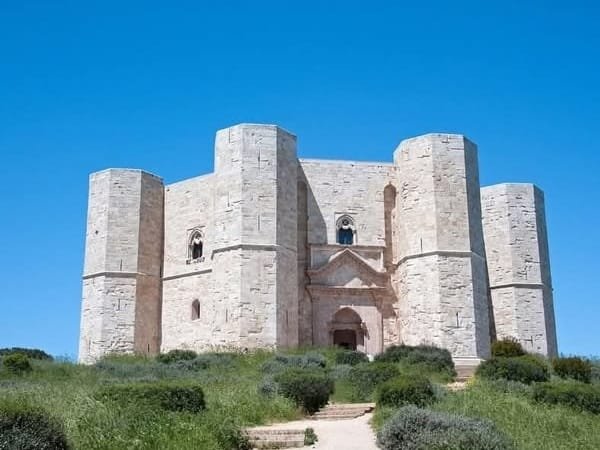
In the north of the region, around Andria, Trani and Corato, the Castel del Monte area takes its name from Frederick II’s famous octagonal castle, a UNESCO World Heritage Site. It is the only area in Puglia with an officially signposted wine route, linking several estates open to visitors.
The Castel del Monte appellation covers every style — red, white, rosé — and is home to three of the region’s four DOCGs: Castel del Monte Nero di Troia Riserva, Castel del Monte Bombino Nero and Castel del Monte Rosso Riserva. Some of the area’s oldest estates, such as Rivera or Torrevento, offer visits and tastings by reservation.
The Itria Valley: white wines and IGP

The Itria Valley, between Locorotondo, Martina Franca and Cisternino, is best known for its dry white wines and its trulli, but it also produces good light reds under a protected geographical indication (IGP Valle d’Itria). The Locorotondo DOC and Martina Franca DOC appellations, based on verdeca and bianco d’Alessano, offer fresh, easy-drinking whites, perfect as an aperitif after a day spent visiting the villages.
Salento: primitivo and negroamaro

In the south, Salento accounts for most of the production of primitivo and negroamaro. Around Manduria, the Primitivo di Manduria DOC appellation — and its DOCG Dolce Naturale version, made from semi-dried grapes — gives powerful red wines, rich in alcohol and fruit. Further west, the Salice Salentino DOC appellation, mostly based on negroamaro, is one of the region’s highest-volume appellations.
Producers such as Cantine San Marzano, in Manduria, are among the best-known estates for a cellar visit in Salento.
Visiting a cantina: what to expect
In most cantine, a standard visit includes a walk through the cellars, an explanation of the winemaking methods and a tasting of 3 to 5 wines, often served with local products (cured meats, cheeses, bread). Allow 1h to 1h30 in general, and book in advance: many estates only receive visitors by appointment, especially outside the high season.
Opening hours, prices and booking arrangements vary from one estate to another and change regularly: always check the up-to-date information directly with the cantina before you go.
Cantine Aperte and other events
The easiest way to discover several estates in one go is Cantine Aperte, organised by the Movimento Turismo del Vino on the last weekend of May: many Puglian cantine open their doors to the public for visits and tastings, often without reservation. The harvest period, in September, is also a good time to see the estates at work, although visits are sometimes more limited because of the work under way.
Where to taste without visiting a cellar
If you’d rather not visit a cellar, many enoteche (wine shops with a wine bar) in the historic centres of Lecce, Bari or Ostuni offer tastings by the glass with a selection of local wines. It is a good option for discovering several appellations without driving between estates. Restaurants and trattorias also usually list local wines; see our guide to Puglian gastronomy for the region’s classic food and wine pairings.
Mistakes to avoid
- Setting off without a reservation: many cantine only receive visitors by appointment, especially outside the major events.
- Driving right after a tasting: it is better to appoint a designated driver or limit the number of cellars you visit in a day.
- Sticking to primitivo: negroamaro, nero di troia and the whites of the Itria Valley are just as worth discovering.
- Improvising in midsummer: many estates cut their hours or close on certain days in high season.
Plan your wine route with APULIA
Want to organise your wine route day by day, combine it with Puglia’s villages and beaches, and save your favourite addresses? The APULIA app builds a tailor-made itinerary based on your dates and your preferences.
Fancy a stress-free trip mixing tastings and discovering Puglia?
Plan my stay with APULIAIn summary
A wine route in Puglia is built to measure, cellar by cellar: Castel del Monte and its official route in the north, the white wines of the Itria Valley in the centre, and the primitivo and negroamaro of Salento in the south. Book your visits in advance, aim for the last weekend of May for Cantine Aperte, and arrange a designated driver if you are lining up several tastings in a day.
Frequently asked questions
What is the best-known grape variety in Puglia?
Primitivo, identical to California’s zinfandel, is the most famous, particularly around Manduria and Gioia del Colle.
Is there an official wine route in Puglia?
Yes, just one: the Strada dei Vini DOC Castel del Monte, in the north of the region. Elsewhere, you visit cantina by cantina.
When is Cantine Aperte held in Puglia?
On the last weekend of May, when many estates open their doors to the public for visits and tastings, often without reservation.
Do you need to book to visit a cantina?
Yes, in most cases, especially outside major events such as Cantine Aperte.
What is the difference between primitivo and negroamaro?
Primitivo, more powerful and higher in alcohol, dominates around Manduria and Gioia del Colle. Negroamaro, with softer tannins, is mainly associated with the Salice Salentino appellation.