
A limestone promontory jutting into the Adriatic like a spur, the Gargano is unlike any other part of Puglia. Here you won’t find olive-grove plains or trulli, but white cliffs plunging into a turquoise sea, a thousand-year-old forest listed by UNESCO, villages perched above the void and a wild archipelago reachable only by boat.
Between sea and mountains, the Gargano is visited at a different pace from the rest of Puglia: people come for the coves, the sanctuaries and the wide-open spaces, not for old-town terraces. Here is what you shouldn’t miss.

QUICK ANSWER
- Must-sees: Vieste and the Pizzomunno rock, the village of Peschici, the Foresta Umbra, the sanctuary of Monte Sant’Angelo and the Tremiti Islands.
- Recommended length of stay: 3 to 5 days to cover the essentials, a week to take your time and visit the Tremiti.
- Best time to visit: May-June and September, to avoid the crowds and the August heat.
- Getting there: by car from Foggia (the nearest airport) or Bari; a car is almost essential once you are there.
Contents
- Vieste and the Pizzomunno rock
- Peschici, the white village hanging above the sea
- The Foresta Umbra, the Gargano’s thousand-year-old forest
- Monte Sant’Angelo and the Sanctuary of St Michael
- The Tremiti Islands, the wild archipelago off the Gargano
- The most beautiful beaches and coves of the Gargano
- Specialities and flavours of the Gargano
- Practical information: when to come, how to get there, how long to stay
1. Vieste and the Pizzomunno rock
Vieste is the tourist capital of the Gargano, built on a rocky spur between two long beaches of fine sand. Its historic centre, with its narrow white lanes, ends in a point on the cliff, offering spectacular views over the Adriatic.
On the beach, right at the foot of the old town, stands the Pizzomunno: a limestone monolith 25 metres high, which has become the emblem of the Gargano. Legend tells the story of Pizzomunno, a fisherman loved by all the mermaids, and of Cristalda, the only woman he ever loved: out of jealousy, a mermaid is said to have turned Pizzomunno to stone to stop him from joining her, and every hundred years, it is said, the rock opens for one night to let the two lovers find each other again.
Vieste is also the main departure point for boat excursions to the Gargano’s sea caves and to the Tremiti Islands. Book your crossing the day before in high season, as departures fill up quickly.
2. Peschici, the white village hanging above the sea
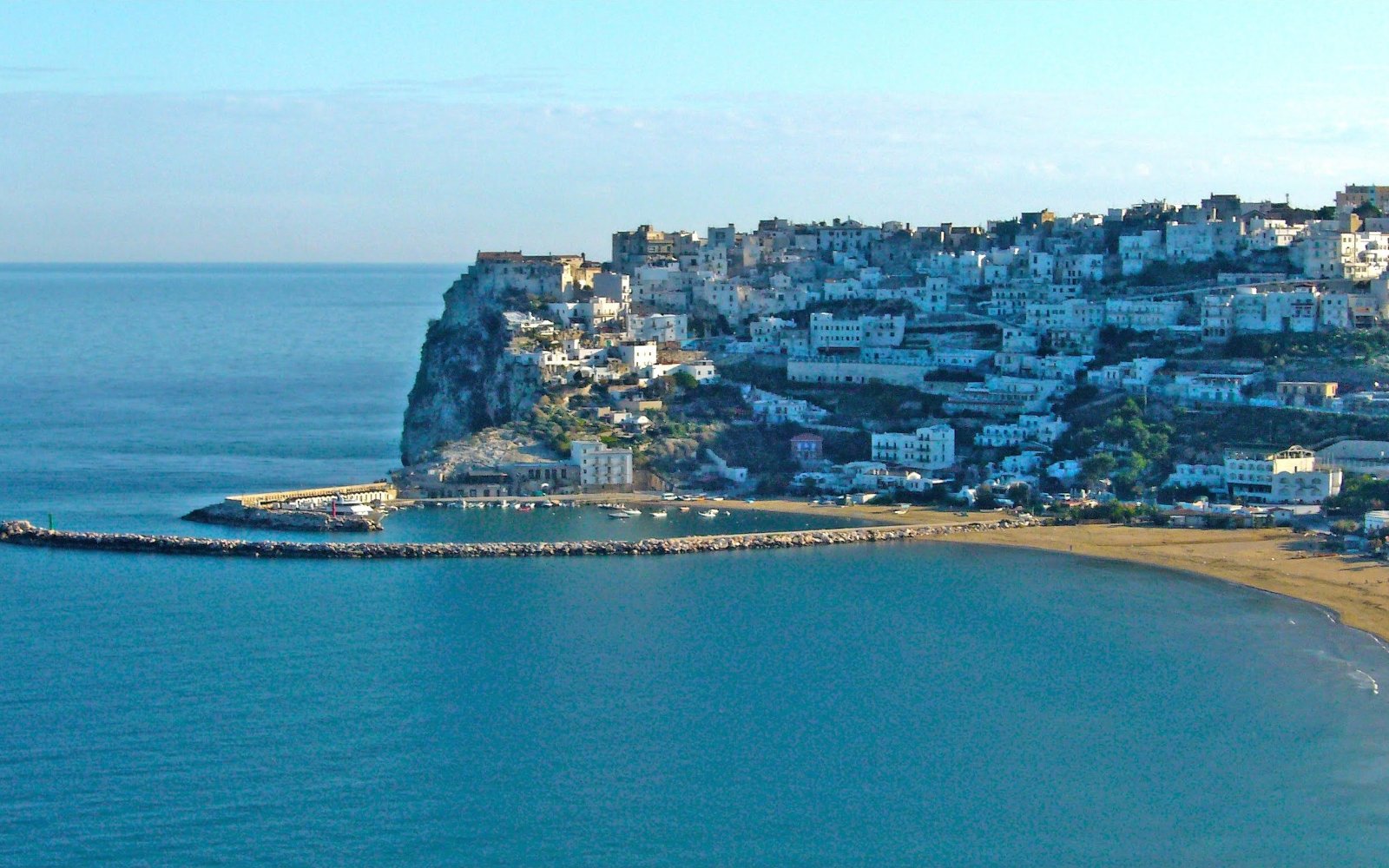
About thirty minutes by road from Vieste, Peschici is often considered the most beautiful village in the Gargano. Perched on a rocky headland, its white houses with their terraces and outdoor staircases literally cling to the cliff, facing a sea of intense blue.
The village is best explored on foot, along lanes that wind between arches and covered passages, with plenty of improvised viewpoints over the coast. Below, the beach of Peschici and the trabucchi — the old wooden fishing machines on stilts typical of the Gargano coast — complete the picture.
Peschici is, incidentally, one of the most beautiful villages in Puglia, alongside better-known places such as Ostuni or Locorotondo, but with a much more maritime atmosphere.
3. The Foresta Umbra, the Gargano’s thousand-year-old forest

A total contrast with the cliffs and beaches: in the heart of the promontory lies the Foresta Umbra, an ancient forest of beech, oak and pine that covers a good part of the Gargano National Park. Its name, “forest of shade”, comes from the density of its canopy, which lets barely any light filter through.
The beech forests of the Gargano are part of the UNESCO World Heritage property “Ancient and Primeval Beech Forests of the Carpathians and Other Regions of Europe”. There are marked hiking trails, a small lake set up as a picnic area, and discreet but rich wildlife, including roe deer and many species of birds.
The Foresta Umbra is noticeably cooler than the coast in summer: a welcome stop in the middle of August, ideally around midday between two village visits.
4. Monte Sant’Angelo and the Sanctuary of St Michael

Monte Sant’Angelo is one of the oldest pilgrimage sites in Western Europe. Its Sanctuary of St Michael the Archangel, carved into the rock around a cave where the archangel is said to have appeared several times in the 5th century, has drawn pilgrims since the early Middle Ages.
Together with six other Lombard sites in Italy, the sanctuary is part of the UNESCO World Heritage property “The Longobards in Italy, Places of Power (568–774 A.D.)”. A monumental staircase leads down to the cave itself, while the village around it, white and huddled on its rocky spur, is also worth a stroll for its views over the Gulf of Manfredonia.
About twenty minutes by road away is San Giovanni Rotondo, a town linked to the friar Padre Pio and now one of the most visited pilgrimage sites in Italy. The two stops are easy to combine in half a day.
5. The Tremiti Islands, the wild archipelago off the Gargano
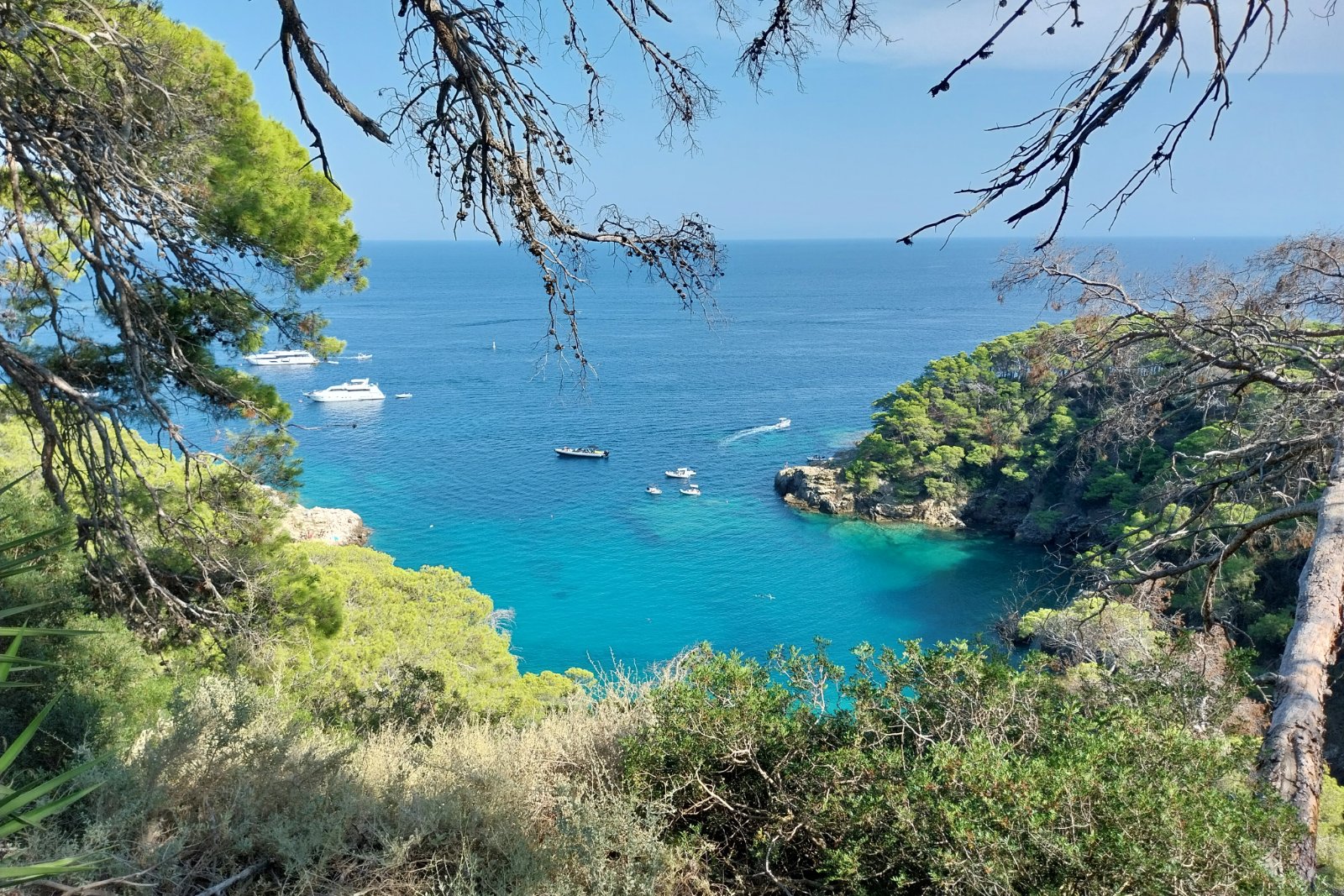
Off the coast of Vieste and Peschici, the Tremiti Islands archipelago forms one of the most beautiful protected marine parks in Italy. The three main islands — San Domino, the greenest and most touristy, San Nicola, the historic and religious centre of the archipelago, and Capraia, almost wild — can be visited in a day from the mainland.
The crystal-clear waters, white cliffs and sea caves of the Tremiti make them a very popular spot for snorkelling and diving. Fast-boat services leave every day in season from Vieste, Peschici, Manfredonia and Rodi Garganico; the crossing takes between 50 minutes and a little over an hour, depending on the departure point.
In July-August, ferry tickets for the Tremiti sell out very quickly: book online several days in advance, especially for a return trip on the same day.
6. The most beautiful beaches and coves of the Gargano

The Gargano has some of the most beautiful beaches in Puglia, very different from the long stretches of sand on the Ionian coast: here the coves dominate, tucked between two limestone walls and reached on foot, by boat or by small staircases cut into the rock.
The Baia delle Zagare, with its famous faraglioni (rocks detached from the coast) and its sheltered cove, and neighbouring Vignanotica, lined with spectacular white cliffs, are among the most photographed sites in the region. Further north, the beaches of Vieste and Peschici offer a comfortable compromise between fine sand and easy access.
The Gargano is, in fact, one of the stars of our selection of the most beautiful beaches in Puglia, alongside sites such as Polignano a Mare or the Salento peninsula.
7. Specialities and flavours of the Gargano
The cuisine of the Gargano blends products from the forest and the sea. Caciocavallo podolico, a stretched-curd cheese made from the milk of Podolica cows raised semi-free on the promontory’s pastures, is one of its flagship products, as are the honey and mushrooms gathered in the Foresta Umbra.
On the coast, troccoli (fresh pasta shaped like long ribbons) are often enjoyed with seafood, while the Gargano orange (Arancia del Gargano), grown in the sheltered valleys of the promontory, is renowned throughout Puglia for its sweetness. The seaside restaurants of Vieste and Peschici focus on the catch of the day, often cooked on the plancha or simply grilled.
For a fuller tour of regional specialities, our guide to the gastronomy of Puglia details the great classics to try throughout the region.
8. Practical information: when to come, how to get there, how long to stay
| Question | Answer |
|---|---|
| Best time to visit | May-June and September (milder heat, fewer people); July-August for the summer atmosphere but heavy crowds |
| Nearest airport | Foggia (about 1h by road); Bari (about 2h) remains the option with the most flights |
| Getting around | Car strongly recommended: villages and coves are scattered and poorly served by public transport |
| Recommended length of visit | 3 to 5 days for Vieste, Peschici, the Foresta Umbra and Monte Sant’Angelo; add 1 to 2 days for the Tremiti Islands |
The Gargano combines well with a wider stay in Puglia: many travellers pair it with a stop in the Salento or the Itria Valley to vary the atmosphere between wild sea and trulli countryside. To build a tailor-made itinerary based on your dates and wishes, head to our interactive map of Puglia.
Explore the Gargano with APULIA
Want a day-by-day itinerary for the Gargano, with the best addresses and the ferry times for the Tremiti? The APULIA app builds a tailor-made stay based on your dates, your pace and your wishes.
Want a hassle-free stay in the Gargano and Puglia?
Plan my stay with APULIAFrequently asked questions
How many days do you need to visit the Gargano?
Allow at least 3 days to see Vieste, Peschici and the Foresta Umbra. With Monte Sant’Angelo and an excursion to the Tremiti Islands, plan on 5 to 7 days instead.
What is the best time to visit the Gargano?
May-June and September offer the best compromise between pleasant weather and moderate crowds. July and August remain the liveliest months, but also the busiest and the most expensive.
How do you get to the Tremiti Islands from the Gargano?
Ferries and fast boats leave in season from Vieste, Peschici, Rodi Garganico and Manfredonia, with a crossing of about 50 minutes to 1h15 depending on the departure port. It is best to book in advance in July-August.
Is the Gargano suitable for families with children?
Yes: the sandy beaches of Vieste and Peschici are ideal for families, and the Foresta Umbra offers easy, shaded walks. Just plan on having a car, as the distances between sites are rarely covered on foot.
Do you need a car to visit the Gargano?
It is strongly recommended. The villages, beaches and sites of the Gargano are scattered across a vast mountainous area, and public transport is limited, especially outside the high season.
Can you hike or dive in the Gargano?
Yes, the Foresta Umbra has lovely wooded trails, and the sea caves of Vieste and Peschici are among the best snorkelling spots in Puglia. See our guide to hiking, cycling and diving in Puglia.