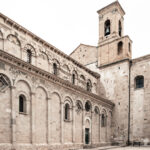
Troia Co-cathedral
Romanesque Cathedral (1093-1125), openwork rose window with eleven columns, and bronze doors by Oderisio da Benevento (1119-1127).
Voir sur la carte ›Les informations utiles à connaître avant ta visite.

Public parking lots on the outskirts of the historic center.
In 2026, a summer pedestrian zone (via Regina Margherita and central squares) is active daily from 6 PM to 1 AM, from July 1 to August 31. ZTL hours and rules are subject to change. Always check the signage at the zone entrance to avoid fines.
Siponto (Manfredonia), on the Adriatic coast
Distance : 66000
Historique, spirituelle, monumentale, paisible.
One of the most remarkable Romanesque cathedrals in Puglia, spiritual heritage of the Via Francigena, and authenticity.
Information non renseignée pour le moment.
Visit the cathedral and its rose window, explore the cathedral treasury and diocesan museum, or walk a stage of the Via Francigena. Local tips: taste the olive oil and Nero di Troia wine.
1 h — Quick visit | 2 to 3 h — Recommended visit | half a day — Full visit
Les informations utiles pour organiser ton arrivée, tes déplacements et ton stationnement autour de cette destination.
From Foggia, it takes about 25 minutes by car via the SP 115 provincial road. The route toward Naples follows the SS 90.
No train station in Troia: the Troia-Castelluccio Sauri station on the Naples–Foggia line closed in 2007. The nearest station is Foggia, approximately 25 minutes away by car.
Hours & tickets:
Trenitalia
Bus connections are available from Foggia, with a few departures per day. View lines
Troia is worth visiting for its Romanesque cathedral, begun in 1093: an eleven-rayed rose window and bronze doors by Oderisio da Benevento. The hilltop center can be explored on foot in two or three hours, including the cathedral’s treasury and the town’s small museums. It’s a quiet stop at the gates of the Monti Dauni, without beaches or crowds, about 25 minutes from Foggia. Fun fact: the rose window was featured on the back of the old 5,000 lire banknotes.


Les informations pratiques pour organiser ta visite.
Consulte la carte des bornes de recharge disponibles autour de cette destination.
Voir les bornes de rechargePublic parking lots on the outskirts of the historic center.
In 2026, a summer pedestrian zone (via Regina Margherita and central squares) is active daily from 6 PM to 1 AM, from July 1 to August 31. ZTL hours and rules are subject to change. Always check the signage at the zone entrance to avoid fines.
Siponto (Manfredonia), on the Adriatic coast
Distance : 66000
Historique, spirituelle, monumentale, paisible.
One of the most remarkable Romanesque cathedrals in Puglia, spiritual heritage of the Via Francigena, and authenticity.
Information non renseignée pour le moment.
Visit the cathedral and its rose window, explore the cathedral treasury and diocesan museum, or walk a stage of the Via Francigena. Local tips: taste the olive oil and Nero di Troia wine.
1 h — Quick visit | 2 to 3 h — Recommended visit | half a day — Full visit
From Foggia, it takes about 25 minutes by car via the SP 115 provincial road. The route toward Naples follows the SS 90.
No train station in Troia: the Troia-Castelluccio Sauri station on the Naples–Foggia line closed in 2007. The nearest station is Foggia, approximately 25 minutes away by car.
Hours & tickets:
Trenitalia
Bus connections are available from Foggia, with a few departures per day. View lines
Ajoute tes favoris et construis ton itinéraire avec APULIA.
Créer mon séjour
Romanesque Cathedral (1093-1125), openwork rose window with eleven columns, and bronze doors by Oderisio da Benevento (1119-1127).
11th-century basilica, one of the oldest religious buildings in the city.
Diocesan museum housing medieval Exultet scrolls and the cathedral treasury.
Noble palace in the historic center, a witness to the manorial history of Troia.

Troia's civic museum, devoted to art and archaeology.