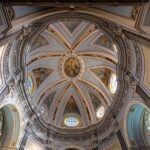
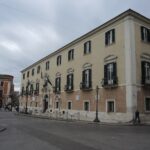
Cattedrale di Foggia
12th-century cathedral with a Romanesque stone facade, whose interior was remodeled in a Baroque style after the 1731 earthquake.
Voir sur la carte ›Les informations utiles à connaître avant ta visite.

Paid and free parking in the city center
ℹ️ Foggia's historic center, between Via Arpi, Corso Vittorio Emanuele, and Via Manzoni, is located in a ZTL zone and monitored by cameras; pedestrian zones are protected by mobile bollards. General hours are not published: follow the signs. ℹ️ ZTL hours and rules can change. Always check the signs at the entrance to the zone to avoid any fines.
Siponto (Manfredonia), on the Adriatic coast of Gargano
Distance : 42000
Urbaine, commerçante et animée, avec un passé impérial
Unique Swabian imperial heritage, large well-connected regional capital, rich history linked to transhumance and the Tavoliere
Information non renseignée pour le moment.
Visit the cathedral, tour Porta Arpana and Palazzo Dogana, stroll through the Villa Comunale (second largest public garden in central-southern Italy), Umberto Giordano theater, Museo Civico.
2 h — Quick visit | 3 to 4 h — Recommended visit | 1 day — Full visit
Les informations utiles pour organiser ton arrivée, tes déplacements et ton stationnement autour de cette destination.
Foggia is a road junction. From Lucera, allow about 20 minutes; Manfredonia is 40 minutes away; Bari is about 1 h 30 min for 135 km.
Foggia station is a major railway hub: you will find trains to Bari and Lecce (Adriatic line), as well as to Naples and northern Italy. Check schedules before you leave.
Schedules & tickets:
Trenitalia
Foggia is the main bus hub for the province, with a terminal near the railway station and connections to Bari, Manfredonia, the Gargano, Lucera, and neighboring municipalities. See lines
Foggia is the capital of the Tavoliere, in the heart of the vast plain of Capitanata. The city was rebuilt after the 1731 earthquake, then after the 1943 bombings: few old quarters remain, but a few places are worth a stop. These include the cathedral (12th century, remodelled), the Porta Arpana known as the Tre Archi, the 15th-century Palazzo Dogana, the Umberto Giordano Theatre, and the large Villa Comunale. A practical stop, especially on the way to Gargano or the Monti Dauni.


Les informations pratiques pour organiser ta visite.
Consulte la carte des bornes de recharge disponibles autour de cette destination.
Voir les bornes de rechargePaid and free parking in the city center
ℹ️ Foggia's historic center, between Via Arpi, Corso Vittorio Emanuele, and Via Manzoni, is located in a ZTL zone and monitored by cameras; pedestrian zones are protected by mobile bollards. General hours are not published: follow the signs. ℹ️ ZTL hours and rules can change. Always check the signs at the entrance to the zone to avoid any fines.
Siponto (Manfredonia), on the Adriatic coast of Gargano
Distance : 42000
Urbaine, commerçante et animée, avec un passé impérial
Unique Swabian imperial heritage, large well-connected regional capital, rich history linked to transhumance and the Tavoliere
Information non renseignée pour le moment.
Visit the cathedral, tour Porta Arpana and Palazzo Dogana, stroll through the Villa Comunale (second largest public garden in central-southern Italy), Umberto Giordano theater, Museo Civico.
2 h — Quick visit | 3 to 4 h — Recommended visit | 1 day — Full visit
Foggia is a road junction. From Lucera, allow about 20 minutes; Manfredonia is 40 minutes away; Bari is about 1 h 30 min for 135 km.
Foggia station is a major railway hub: you will find trains to Bari and Lecce (Adriatic line), as well as to Naples and northern Italy. Check schedules before you leave.
Schedules & tickets:
Trenitalia
Foggia is the main bus hub for the province, with a terminal near the railway station and connections to Bari, Manfredonia, the Gargano, Lucera, and neighboring municipalities. See lines
Ajoute tes favoris et construis ton itinéraire avec APULIA.
Créer mon séjour
12th-century cathedral with a Romanesque stone facade, whose interior was remodeled in a Baroque style after the 1731 earthquake.
The only original gate remaining from the city's ancient walls, an emblematic vestige of medieval Foggia.
The second largest public garden in central-southern Italy, designed on the model of the Villa Floridiana in Naples; the green lung of the city center.
Neoclassical theater inaugurated in 1828, a major center for the city's cultural and musical life.
Museum housing Neolithic, Daunian, and Roman archaeological collections, as well as records of the city's history.
With a licensed guide just for your group, follow the life of Saint Pio, the Capuchin...
With a licensed guide just for your group, start at the castle of Monte Sant'Angelo, seen...